When Your AC Suddenly Quits on a Sweltering Cocoa Day
When your AC stops cooling in Cocoa on a sticky August afternoon, everything inside your home changes fast. The air feels heavy, the house warms up, and people and pets start getting uncomfortable. You are not just annoyed. You are worried about everyone in the house and what it might take to fix the problem.
In our area, that sudden loss of cooling often points to one main part, the compressor. When the compressor quits, the whole system can feel like it just gave up. Knowing what usually happens next, from the first inspection to possible AC compressor replacement in Cocoa, helps you make quicker and calmer choices when the air turns warm and the pressure is on to act.
How to Tell If Your Cocoa AC Compressor Has Failed
Before a compressor fully dies, it often sends warning signs. A few common ones show up in the house first:
- Air from the vents feels warm or barely cool
- The indoor temperature never reaches the number on the thermostat
- The unit runs longer and longer just to keep up
- The system turns on and off a lot in short bursts
At the outdoor unit, you may see or hear things that point toward compressor trouble, like:
- Loud humming, buzzing, or clicking with weak cooling
- The fan spinning but the deeper compressor sound never really starting
- The breaker for the outdoor unit tripping again and again
- Ice forming on lines or on the unit even when it is hot outside
Some issues can look similar, like a bad thermostat, a clogged filter, or a frozen indoor coil. Those are real problems, but they are different from a failing compressor. If your system is blowing only warm air or keeps shutting off, that is a good time to stop guessing and bring in a trained tech instead of trying DIY tricks.
Fast diagnosis matters in our heat. In late August around Cocoa, a home without cooling can heat up quickly. That is hard on kids, older family members, and pets, and it can also stress other HVAC parts. Catching compressor issues early can help prevent more damage to the system.
What Happens During a Professional Compressor Inspection
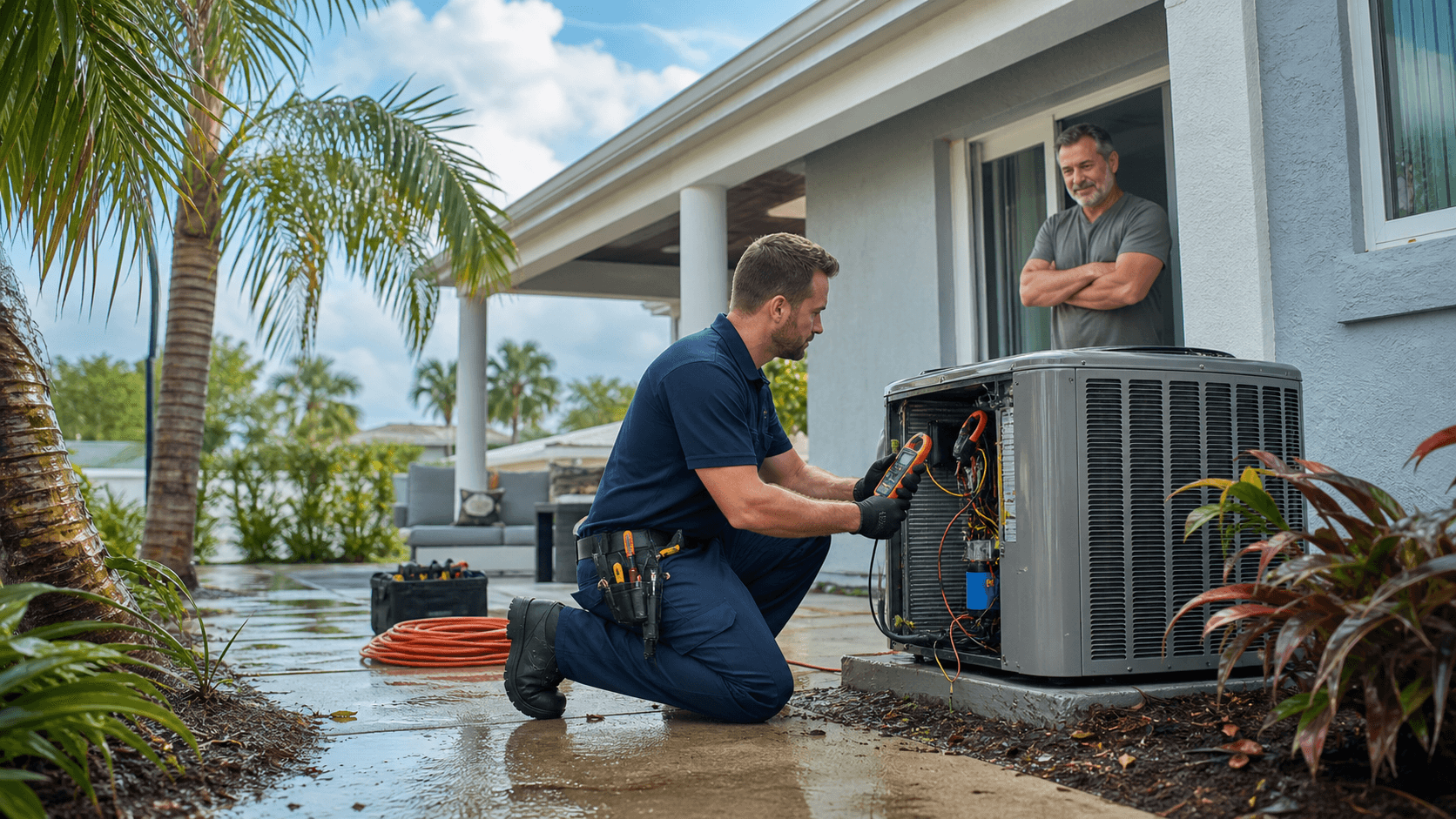
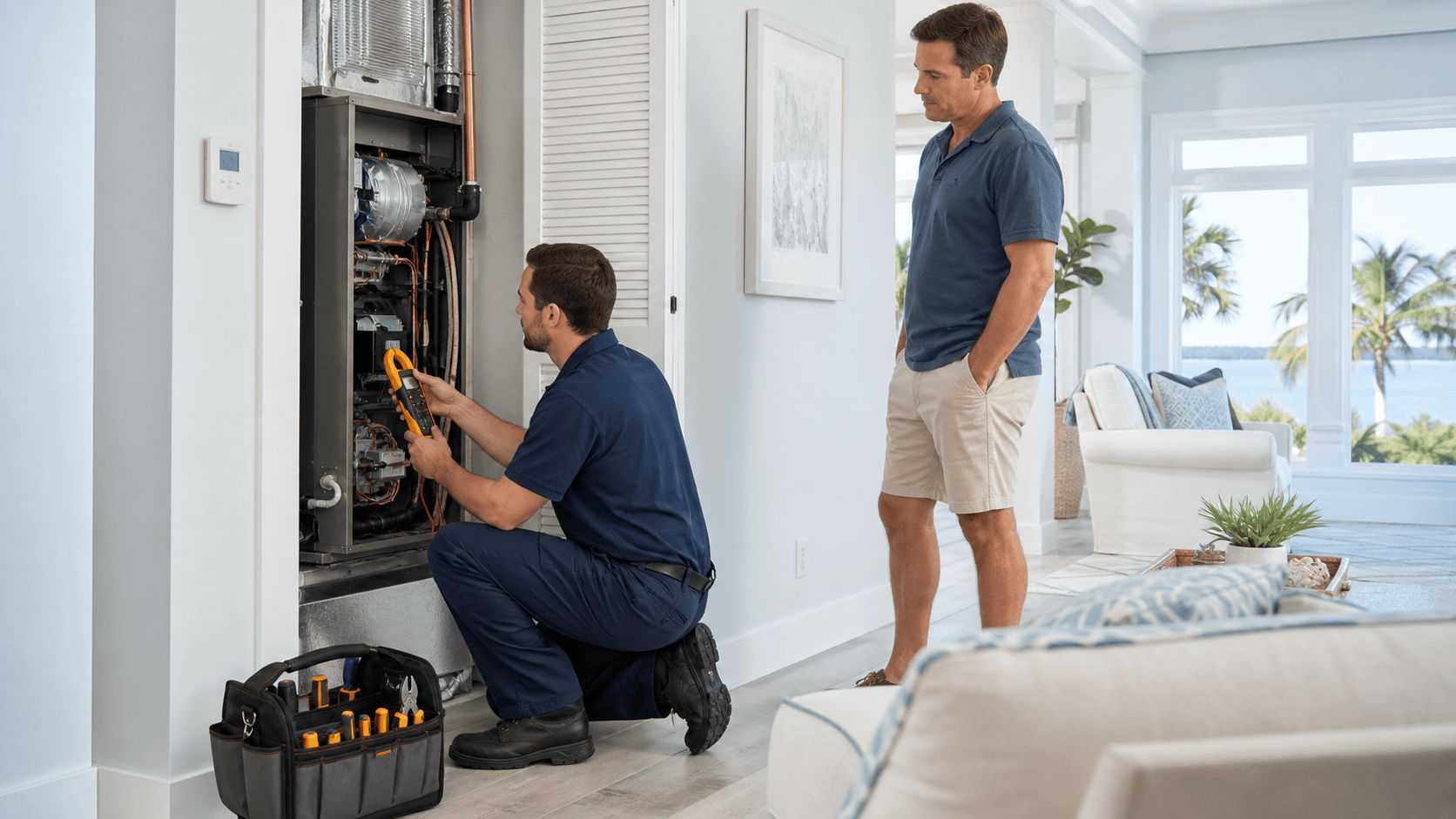
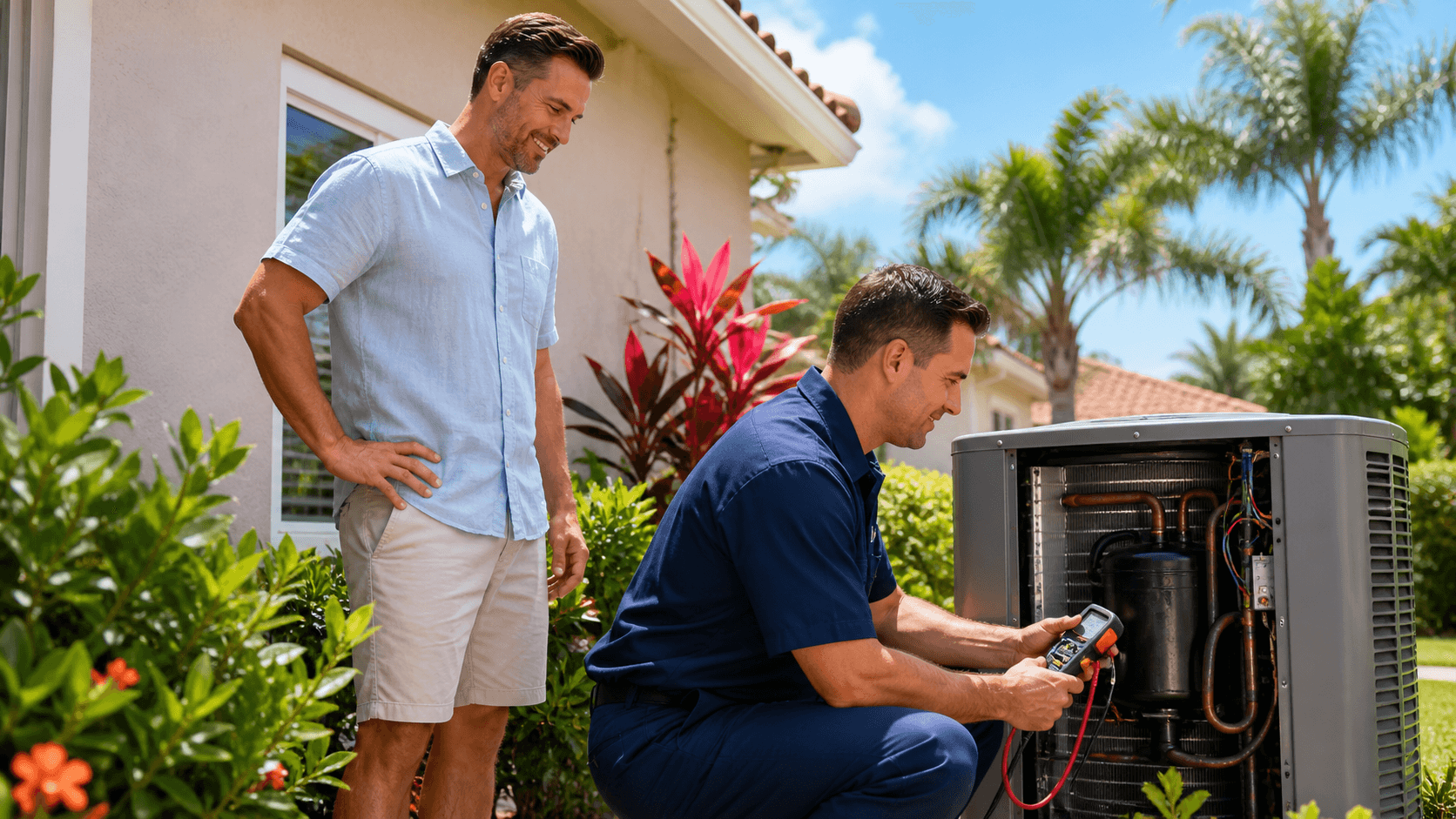
When one of our technicians comes out for a compressor issue, there is a clear step-by-step process. First, we safely power down the system, inside and out. This keeps everyone safe and protects the equipment. Then we look over the outdoor unit, the wiring, and the refrigerant lines for any obvious damage or loose parts.
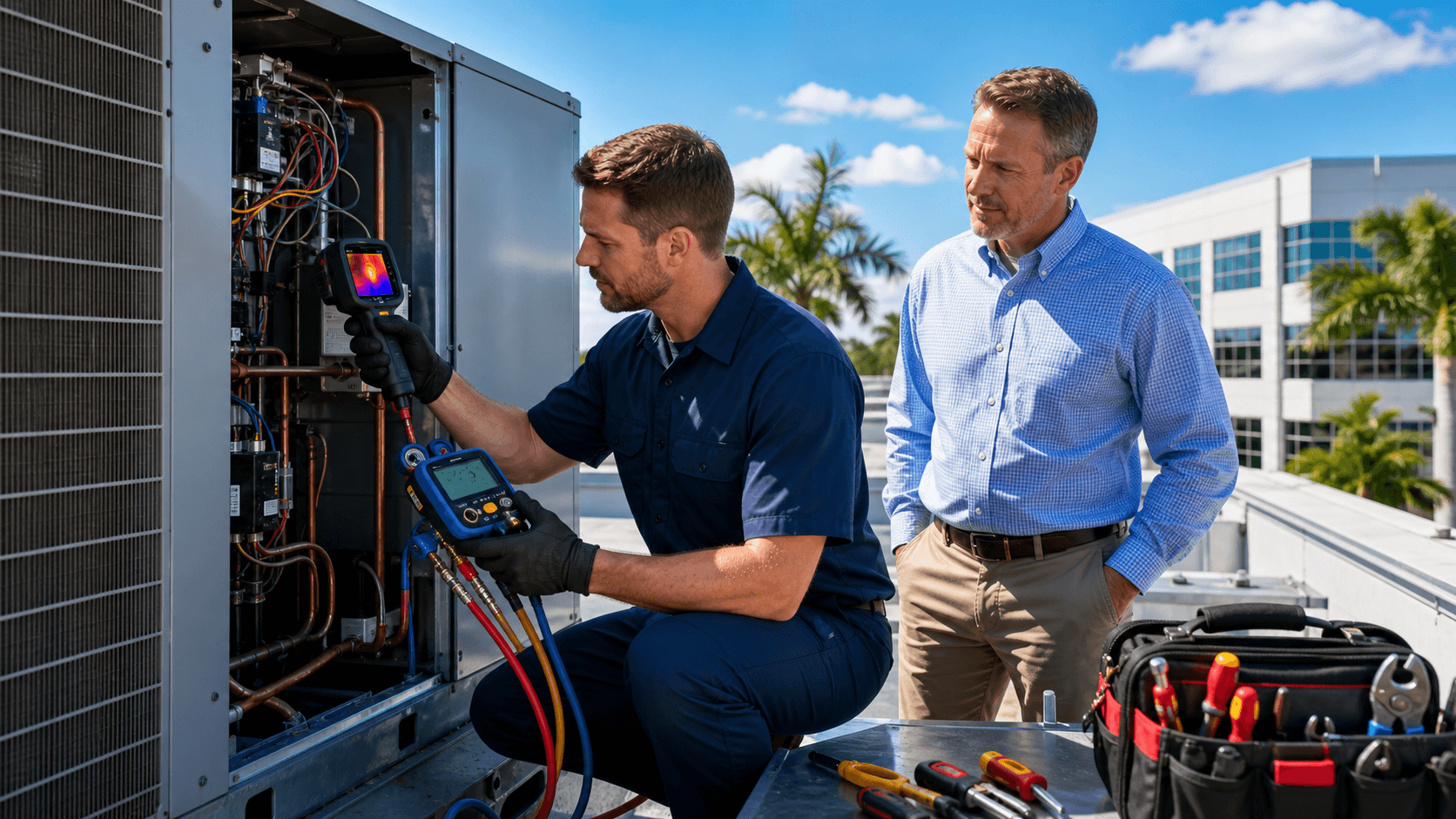
Next, we use tools to test what you cannot see with the eye:
- Gauges to read refrigerant pressures
- Meters to test capacitors, contactors, and wiring
- Amperage readings to see how hard the compressor is working
These tests tell us if the compressor itself has failed or if a supporting part around it is the real problem. Then we look at the age and history of the unit. Has it needed several repairs in a short time? Is it still under a parts warranty? Did power issues or low refrigerant likely cause the damage?
A careful inspection is not just for peace of mind, it also protects your warranty and your safety. Compressors work with high voltage power and refrigerant, so this is not a DIY job. A clear, honest diagnosis also helps you avoid paying for the wrong repair or replacing parts that are not really the issue.
Repair vs. AC Compressor Replacement in Cocoa
Once the problem is clear, the big question is what to do next. For many homeowners in Cocoa, the choice is between repairing around the compressor or going ahead with AC compressor replacement in Cocoa, or sometimes even a full system changeout.
Some key things to think about are:
- Age of the system
- Warranty on the compressor and major parts
- How often you have called for repairs recently
- How well the system cools on the hottest days
If your system is fairly new and still under or near warranty, repairing a failed supporting part can make sense. A bad capacitor, a contactor, or a small electrical issue is usually worth fixing, especially if the rest of the system is in good shape.
If the system is older, has needed several recent fixes, or struggles badly during August heat, compressor replacement or even a full system upgrade can be the smarter long-term move. An aging compressor often pulls more power, runs longer, and still fails to keep you comfortable. Newer systems can cool more evenly and use less energy, which can help lower bills over time.
This is also a good time to talk about possible rebates, financing choices, and projected energy savings. A local company can walk you through how each option might work in your home before you decide.
What to Expect on Compressor Replacement Day
If you choose compressor replacement, it helps to know what the day will look like. First is scheduling and an arrival window, so you know when to plan for some time without cooling. When the crew arrives, they will walk around the job area, plan access to the outdoor unit, protect floors and work paths, and explain what they will be doing.
The technical steps usually go in this order:
- Recovering and capturing the old refrigerant from the system
- Opening the outdoor unit and removing the failed compressor
- Installing the new compressor and any needed matching parts
- Pulling a vacuum on the lines, then recharging the system with refrigerant
- Checking for leaks and tightening connections
Most compressor replacements can be done the same day, but the exact length of time can vary with access, weather, and how complex your system is. Expect some tool noise and a period with no cooling while the work is in progress, which can feel extra hot during late August in Cocoa.
Before we leave, we start the system back up, test temperatures and pressures, and make sure the thermostat is set and working right. We also walk you through any new sounds or normal run patterns to expect, plus simple tips to help your new compressor last longer.
Keeping Your New Compressor Running Strong in Florida Heat
Once your new compressor is in, a little care goes a long way. In our hot, humid climate, your AC works hard most of the year. Basic habits can make a real difference:
- Change or clean air filters on a regular schedule
- Keep bushes, grass, and debris at least a couple feet away from the outdoor unit
- Do not close too many vents inside the home
- Watch for breaker trips, ice, or new noises and get them checked quickly
Regular professional maintenance helps catch small refrigerant leaks, weak electrical parts, or airflow problems before they turn into another compressor failure. A yearly tune-up before the hottest part of summer can pay off in comfort and fewer surprises.
Many homeowners like the peace of mind that comes with an ongoing maintenance plan. With a plan, your system gets a set of trained eyes on it at least once a year, and you get reminders before the weather really turns steamy in Cocoa.
Call for Fast Relief When Your Cocoa AC Compressor Quits
When the air turns warm and your AC stops keeping up, fast action matters for comfort and for your system. Late summer heat and storms around Cocoa can be hard on older equipment, and a failed compressor is one of the clearest signs that it is time to bring in help.
Ray Brown Air and Heat is a local, family-owned HVAC company that offers 24/7 service, clear and honest advice about repair versus AC compressor replacement in Cocoa, and straightforward pricing before work begins. When your home is heating up and you need quick relief, we are ready to inspect the system, explain your options in plain language, and help get your home cool again as soon as possible.
Restore Reliable Cooling Comfort in Your Cocoa Home Today
If your AC is struggling or has stopped working, we can help you pinpoint whether a targeted AC compressor replacement in Cocoa will get your system back on track. At Ray Brown Air and Heat, we carefully assess your unit, explain your options clearly, and perform only the work that truly benefits you. Reach out to us today through our contact page to schedule a visit and restore dependable comfort to your home.