Stop Hot and Cold Spots Before Peak Florida Winter
Ductwork problems do not fix themselves. If your home has rooms that never feel quite right, it is usually a sign that your ducts need attention, not just your thermostat. When air is leaking into the attic or getting stuck in a kinked run, your system has to work harder to keep up.
November is a great time for Rockledge homeowners to deal with duct issues. The holidays are coming, guests are on the way, and you want every bedroom and living area to feel comfortable. Catching problems now helps your HVAC system handle both the cooler nights and the usual Florida heat without stress.
Leaks, kinks, and undersized return ducts can all lead to:
- Hot and cold spots in different rooms
- Higher electric bills
- Longer run times and extra wear on your HVAC equipment
To help, we put together a simple ductwork repair checklist. You can use it to spot early warning signs, try a few safe checks, and know when it is time to call for professional ductwork repair in Rockledge.
Spotting the Warning Signs of Duct Trouble
Before anyone climbs into an attic, your home usually tells you something is wrong.
Uneven temperatures and "problem rooms" are some of the biggest clues. Maybe:
- One bedroom is always warmer than the others
- The living room feels sticky while the hallway feels fine
- The system turns on and off a lot, but you still are not comfortable
These issues often come from duct problems, not the AC or heat pump itself. If the duct run to a room is leaking or crushed, that space simply never gets its fair share of air.
Noisy or weak airflow at vents is another red flag. Pay attention if you notice:
- Whistling sounds around vents, which can point to leaks
- Rattling or vibrating when the system comes on
- Strong air at some vents but barely any at others
When one or two vents are weak, it can mean a kinked or crushed duct, or a blocked run. When airflow is low all over the home, that points more toward a system-wide problem that needs a pro right away.
Rising bills and extra dust are also common signs. Leaky or unbalanced ducts can pull dusty air from the attic or garage into your system, then spread it through the home. You may notice:
- More dust on furniture soon after cleaning
- Worsening allergy symptoms
- Gradual increases in your energy bill with no big change in usage
If more than one of these things is happening, your ductwork is a strong suspect.
Quick DIY Checks Before You Call a Pro
There are a few basic checks you can do safely without tools. These will not fix major problems, but they can help you understand what is going on.
Start with a visual inspection of any ducts you can see in the attic, garage, or a closet:
- Disconnected joints or ducts that pulled away from a metal collar
- Visible gaps or tears in the outer jacket on flex duct
- Crushed, kinked, or sharply bent sections
- Sagging runs that dip instead of staying supported
- Missing or damaged insulation on ducts in hot spaces
If you see major damage or loose sections, it is time for a professional to repair or replace those pieces.
Next, try a few simple airflow and draft checks:
- Place the back of your hand in front of several supply vents and compare how strong they feel
- Hold a tissue or light piece of paper near a supply and a return grille, checking that supply blows out and return pulls in
- Open and close doors while the system is running and listen for airflow changes or whistling
You do not need perfect measurements here. You are just looking for vents that are much weaker than others or air that seems to move the wrong way.
Then move to a basic filter, vents, and returns checklist:
- Make sure your air filter is clean and the right size
- Confirm all supply vents are fully open, not partly shut
- Check that furniture, curtains, or rugs are not blocking return grilles
Sometimes, a dirty filter or a blocked return is the whole problem. If you fix those and your home still has hot spots or noisy vents, professional ductwork repair in Rockledge is usually the next smart step.
Professional Testing Methods That Find Hidden Leaks
Some duct issues hide inside walls, behind insulation, or deep in the attic. That is where professional testing methods come in.
With duct pressure tests and duct leakage testing, a technician temporarily seals all the registers, then uses a calibrated fan to pressurize the duct system. By measuring how much air escapes at a set pressure, they can tell:
- How leaky the duct system is as a whole
- Whether your system is likely wasting energy
- If leaks are big enough to cause comfort issues in a humid coastal climate
Airflow balancing and room-by-room measurements are another key step. Pros use tools like anemometers or flow hoods at each register to:
- Measure how much air each room is getting
- Compare those readings to what the system should be delivering
- Adjust dampers or recommend duct changes to even out airflow
Balanced airflow can make a dramatic difference in rooms that always feel stuffy or warm.
Thermal imaging and smoke testing help locate trouble you cannot see with your eyes. Infrared cameras show hot or cool spots along ducts that may mean a leak or missing insulation. Smoke pencils can trace how air moves around joints and seams, so hidden gaps and backdrafts in attics and wall cavities become easy to spot.
Repair Options for Leaks, Kinks, and Poor Returns
Once testing shows where the problems are, there are several repair options.
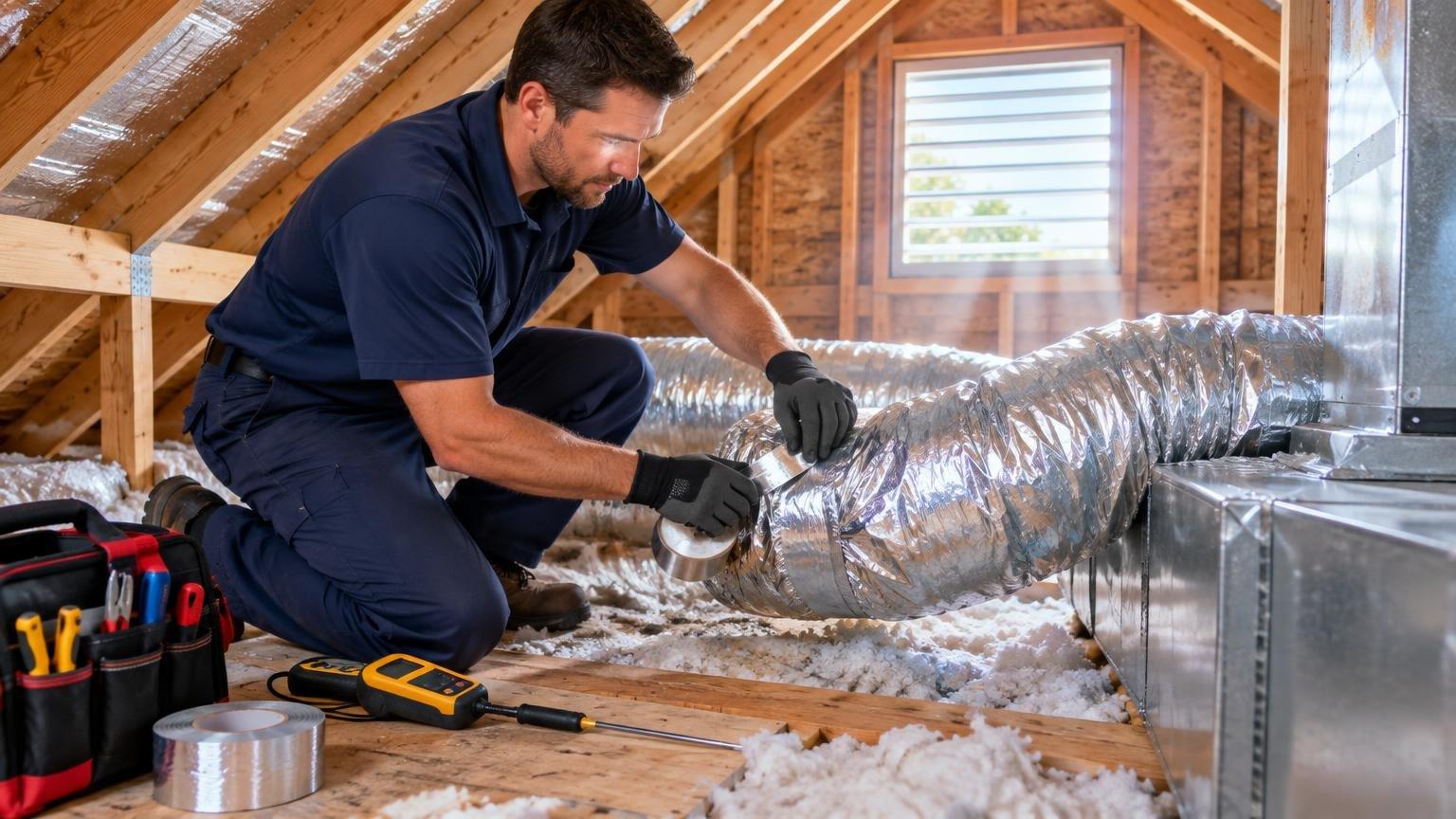
For leaks, the goal is to seal and support the ducts properly. Best practices include:
- Using mastic sealant and metal tape, not cloth "duct tape"
- Sealing the metal boot to the ceiling or wall so conditioned air does not escape into the attic
- Tightening or replacing loose straps and hangers so flex duct does not sag
Good sealing and support help your system perform better during both cooling and heating cycles, which matters in our climate where the AC gets long, hard use.
Straightening kinks and correcting sizing issues is often needed in attics where flex duct took the shortest path instead of the best path. A technician may:
- Flatten or gently re-route kinked flex duct to reduce airflow resistance
- Replace crushed sections that are beyond saving
- Recommend resizing certain runs that are too small or too large for the room
These fixes can noticeably improve airflow to rooms that never seem to catch up with the thermostat setting.
Improving return air and system balance is another big piece, especially in older Rockledge homes. Limited or undersized returns can cause:
- Noisy operation
- Pressure imbalances between rooms
- Hot spots where air gets "trapped"
Common solutions include adding or enlarging return grilles, adjusting balancing dampers, and encouraging better circulation between rooms so the system can breathe the way it was designed.
When to Call Ray Brown Air & Heat in Rockledge
Some duct problems are small, but others should not wait. Clear signals that you need a pro include:
- Rooms that stay more than 3 to 4 degrees different from the rest of the home
- Visible duct damage, like crushed or disconnected runs
- Burning or musty smells when the system starts up
- Energy bills climbing quickly without a clear reason
- No change in comfort after you change filters and clear vents
When we come out for ductwork repair in Rockledge, we start with a careful inspection and, when needed, duct pressure and airflow testing. Then we walk you through what we find in simple terms, so you know which repairs matter most for comfort, indoor air quality, and energy use in your home or small business.
Restore Comfort And Efficiency To Your Home Today
If your energy bills are creeping up or certain rooms never feel quite right, it is time to have your ducts checked by the professionals at Ray Brown Air and Heat. Schedule expert ductwork repair in Rockledge so we can find and fix the issues before they become bigger, more expensive problems. Reach out through our contact page, and we will help you get your system running smoothly again.