Stay Cool in a Titusville Heat Wave Without Draining Your Wallet
Staying comfortable in a Titusville heat wave does not have to send your power bill through the roof. When the heat index climbs and the air feels heavy, most homes run the AC almost nonstop. A few smart changes in how we use our cooling, care for our HVAC system, and manage heat in the house can make a big difference. Small habits add up, especially in our hot, humid Florida weather.
We will walk through simple, low-stress steps you can put in place right away. We will talk about thermostat settings that actually help, shading and landscaping that keep your home cooler, insulation and attic ventilation, filter and airflow tips, and smart peak-hour habits. We will also cover when it is time to call an HVAC pro for service and regular HVAC maintenance in Titusville so your AC is ready for every heat wave.
Smart Thermostat Settings for Florida Summer Heat
In our coastal humidity, aim for comfort, not frostbite. Most homes in Brevard County do well with the thermostat set around 76 to 78 degrees. That range keeps you cool without forcing the system to run nonstop. Raising the setting just a little can help trim your bill over time.
Here is a simple thermostat plan that works for many homes:
- When you are home and awake, try 76 to 78 degrees
- When you are away for a few hours, bump it up a few degrees
- At night, raise it a degree or two and use ceiling fans for comfort
Avoid big swings, like dropping the thermostat way down when you walk in the door. That does not cool your home faster; it just makes the AC run longer. Slow, small changes are easier on your system.
A few other best practices:
- Use a programmable or smart thermostat to follow a schedule
- Keep the thermostat away from lamps, TVs, ovens, and direct sun
- Do not turn the system off on very hot days, let it hold a steady range
When guests are over or you are cooking a lot, it is fine to drop the temp a degree or two. Just bring it back up when things quiet down so the AC is not working harder than it needs to.
Shade, Curtains, and Landscaping That Help Your AC
Florida sun coming through glass is like a heater pointed into your living room. Controlling that sunlight is one of the easiest ways to help your AC.
Indoors, focus on east- and west-facing windows that catch direct morning and afternoon sun. Good options include:
- Blackout or thermal curtains that you close during the hottest hours
- Blinds tilted to block sun but still let in some light
- Reflective or tinted window film to cut down on heat gain
Outside, shade keeps walls, windows, and roofs from heating up as much. Over time, that helps the whole house stay cooler. You can add:
- Awnings or shade sails over patios and large windows
- Pergolas over outdoor seating areas that get harsh sun
- Trees or tall shrubs planted where they block low morning or late-day sun
Your outdoor AC unit also benefits from shade. A condenser sitting in full sun all day has to work harder. Light, open shade is best. Just remember:
- Keep at least a couple of feet of clear space around the unit
- Trim plants so they do not block airflow
- Clear leaves, grass clippings, and sand away from the coils
A cooler, cleaner outdoor unit can run more efficiently and is less likely to struggle when the next heat wave hits.
Insulation and Attic Ventilation That Beat the Heat
Attics in Titusville and nearby areas can get extremely hot under that Florida sun. When the attic is baking, your ceiling heats up, and the rooms below feel warmer, even with the AC running. That means longer run times and higher bills.
Good insulation helps slow that heat. Many Central Florida homes need more insulation than they were built with. Signs you may be low on insulation include:
- Rooms under the attic feel hotter than rooms on lower levels
- Ceilings feel warm to the touch on sunny afternoons
- Big temperature differences from one side of the house to the other
Upgrading to the right insulation level for our region, even in just the attic, can bring more even temperatures and less strain on the AC. There are different insulation types, and a pro can recommend what fits your home and budget.
Ventilation is the other half of the attic story. Hot air needs a way to move out, and fresh air needs a way in. That is where features like ridge vents and soffit vents come in. When they work together, they:
- Help lower attic temperatures compared to stagnant air
- Reduce heat buildup that can affect roofing materials
- Support more stable indoor temperatures for easier AC cooling
Some homes also benefit from attic fans, which help move hot air out when it collects. Proper attic airflow can support more efficient HVAC maintenance in Titusville homes, because the system is not fighting as much trapped heat above your ceiling.
Filters, Airflow, and Peak-Hour AC Habits
Your air filter plays a huge role in how hard your AC has to work. In our humid, sandy coastal area, filters tend to clog faster. A simple rule is to check them often and change them before they look heavily coated with dust. Many homes need new filters more than once a season.
A few filter tips:
- Choose a filter with a MERV rating that fits your system, not the highest number on the shelf
- Mark your calendar or phone to remind you to check the filter regularly
- If you have pets or allergies, plan on more frequent changes
Airflow in the home matters too. Your system is designed to move air in a certain way. When we block vents or close off rooms, we change that flow and add stress.
Try to:
- Keep supply and return vents open and free of furniture or rugs
- Avoid closing vents to "force" more air to other rooms
- Leave interior doors slightly open to help air move freely
During the hottest afternoon hours, your AC works its hardest, and the grid feels the most strain. You can take a little pressure off your system with simple habits:
- Pre-cool your home slightly before the hottest part of the day
- Use ceiling fans turning counterclockwise so air blows down on you
- Run heat-making appliances like ovens, dryers, and dishwashers in the morning or the later evening
- Keep lights off in rooms you are not using and use smaller appliances when possible
Fans do not lower the air temperature, but they help sweat evaporate and make you feel cooler so you can keep the thermostat a bit higher.
When to Call the Pros and Get Ready for the Next Heat Wave
Even with great habits, AC systems still need attention from a professional. You should call for service if you notice any of these red flags:
- Warm air or weak airflow from your vents
- AC turning on and off very often, called short cycling
- Strange noises or smells from the indoor or outdoor unit
- Ice on the refrigerant lines or outdoor unit
- Power bills climbing even though your usage has not changed much
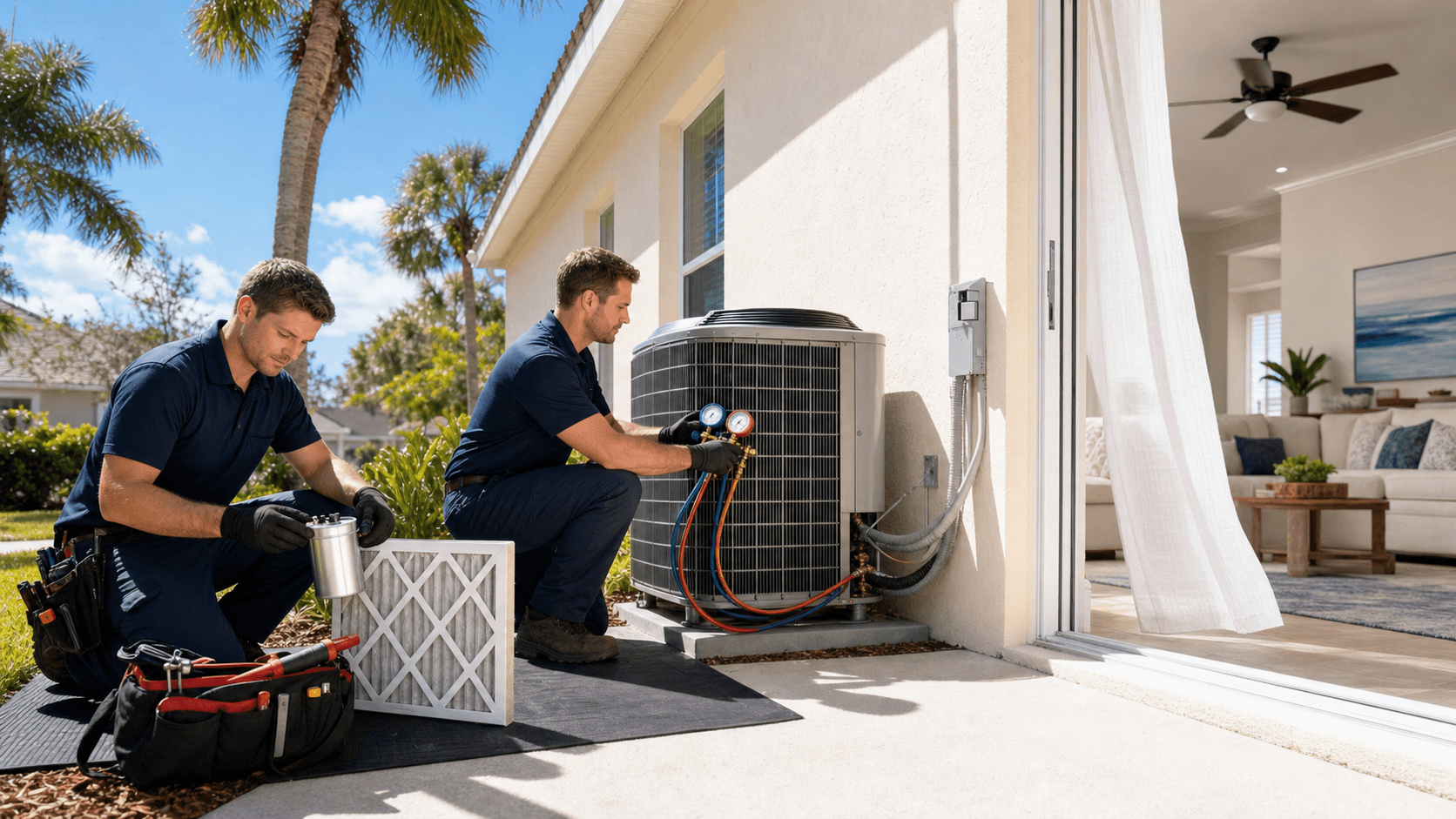
Regular HVAC maintenance in Titusville is one of the best ways to stay ahead of surprise breakdowns. A professional tune-up can include cleaning coils, checking refrigerant levels, inspecting electrical parts, and making sure airflow and controls are working correctly. Catching small issues early helps your system run more smoothly during the next long, hot stretch.
At Ray Brown Air and Heat, we are local to Brevard County and work on AC, heating, and refrigeration systems for homes and light commercial spaces. We provide 24/7 service and same-day repairs across Titusville, Cocoa, Merritt Island, Rockledge, and Cape Canaveral, and we offer seasonal maintenance plans to help keep your system ready when the next heat wave hits. With the right thermostat habits, better shading, solid attic and insulation care, and professional support, your home can stay cool without your AC working harder than it has to.
Protect Your Comfort With Reliable HVAC Care Today
If you are ready to keep your system running efficiently in every season, Ray Brown Air and Heat is here to help with expert HVAC maintenance in Titusville. We will inspect, clean, and tune your equipment so you can avoid surprise breakdowns and high energy bills. Schedule your service online or contact us today to get your next maintenance visit on the calendar.