Stop AC Trouble Early Before Summer Peaks
AC problems in Titusville usually do not start with a full breakdown. They start with something small, like a weird sound or a room that never cools off, then grow into a big headache right when the heat and humidity are worst. When your system runs nonstop in mid-July, even a minor issue can snowball fast.
Most major AC failures begin as warning signs that are easy to brush off. A slight rattle here, a faint smell there, a power bill that seems a little higher than normal. When we ignore these clues, parts wear out faster, strain builds, and the chance of a sudden shutdown goes way up.
By knowing what to watch for, you can catch problems early and protect your home or business. This is especially true here in Titusville, where salt air, storms, and constant humidity are tough on HVAC equipment. Regular HVAC maintenance in Titusville helps keep everything running smoothly and reduces surprise breakdowns right when you need cooling the most.
Strange Noises and Smells That Spell Trouble
Your AC should fade into the background. When it starts to talk back with new noises, it is trying to tell you something is wrong.
Sounds you should never ignore include:
- Rattling or clanking, which can mean loose screws, broken fan blades, or parts shaking around inside the unit
- High-pitched squealing or screeching, often tied to worn belts, bad bearings, or compressor problems
- Grinding or loud buzzing, which can point to serious motor trouble or an electrical issue
These sounds rarely fix themselves. As the system runs day and night, the damage can spread, turning a small repair into a much bigger one.
Smells can also warn you that your AC needs attention. Some common ones are:
- Musty or mildewlike odors from the vents, often caused by moisture and possible mold in or around the system or ductwork, which is common in our humid area
- Burning or hot electrical smells, which can signal overheating parts, wiring problems, or motors that are close to failing
- A light dusty smell the first time the system kicks on after being idle, which usually fades quickly and is less of a concern
Any ongoing smell, especially one that is burning or sharp, is not normal. Loud, new, or worsening noises and any electrical or burning odor are signs to stop guessing and bring in a licensed technician right away. When problems are found early, repairs are often quicker and less disruptive, and you are less likely to face a total cooling loss during a July heatwave.
Weak Airflow and Hot Spots Around Your Home
Sometimes the warning signs are not noisy at all. They show up as comfort problems that seem small at first.
Watch for things like:
- Vents that barely blow air, even when the thermostat is set low
- Rooms that never quite cool off, or always feel stuffy or sticky
- Spots in the house that are much warmer than others
These issues can come from clogged air filters, leaky or crushed ductwork, or blower motors that are wearing out. Closing too many vents can also unbalance the system and cut down airflow, putting strain on your AC.
Uneven cooling is more than an annoyance. When airflow is weak, your system has to run longer to reach the same temperature. That raises your power use and puts extra stress on the blower and compressor. In a humid home, poor circulation can also make moisture problems worse and give mold and mildew a chance to grow.
There are a few simple checks you can handle yourself:
- Make sure the air filter is clean and installed correctly
- Keep vents open and clear of furniture, rugs, or curtains
- Avoid closing too many interior doors for long periods
If you still have hot spots, weak airflow, or you can see damaged or disconnected ductwork, that usually calls for professional help. A trained technician can test your system, inspect the ducts, and adjust things so air flows the way it should.
Short Cycling, Ice Build-Up, and Rising Power Bills
Short cycling is when your AC turns on, runs for a short time, shuts off, and then starts again within just a few minutes. Instead of steady, longer cycles, you get constant stop-and-start action.
Short cycling can be tied to:
- Thermostat problems
- Low refrigerant
- Dirty coils
- Systems that are not matched well to the space
This pattern wastes energy and does a number on your compressor. It can also lead to uneven cooling, because the system never runs long enough to cool and dry the air properly.
Another big warning sign is ice. Ice on the indoor coil, refrigerant lines, or outdoor unit is never normal in our climate. It usually means poor airflow or low refrigerant. Running a frozen system can damage the compressor and other parts, so if you notice icing, it is best to turn the system off and have a professional check it.
Sometimes the clue is more subtle: a sudden jump in your power bill without a big change in how you use your AC. That can mean the system is working much harder just to keep up. Possible causes include:
- Dirty or clogged filters
- Coils coated with dirt or grime
- Refrigerant leaks
- Parts that are starting to fail
A spike in energy use is a good time to schedule a full tune-up and inspection from a local HVAC company that knows Titusville homes and conditions.
When DIY Stops and a Titusville Pro Should Step In
There are a few simple things most homeowners can safely do to help their AC:
- Change or clean air filters on a regular schedule, more often when the system runs nonstop
- Keep the outdoor unit clear of grass clippings, leaves, and yard debris, with open space around it
- Pay attention to new sounds, smells, or comfort changes and note when they start
Beyond that, it is better not to push into DIY repairs. Some problems are not safe to handle on your own, including:
- Refrigerant leaks or refrigerant charging
- Electrical problems or wiring repairs
- Frozen coils or issues that require opening the indoor or outdoor units
- Any work that might affect safety controls
Florida has rules about who can handle refrigerant and other HVAC work. There is also a real risk of making the problem worse, damaging the system, or affecting warranty coverage when you try to fix complex issues without training.
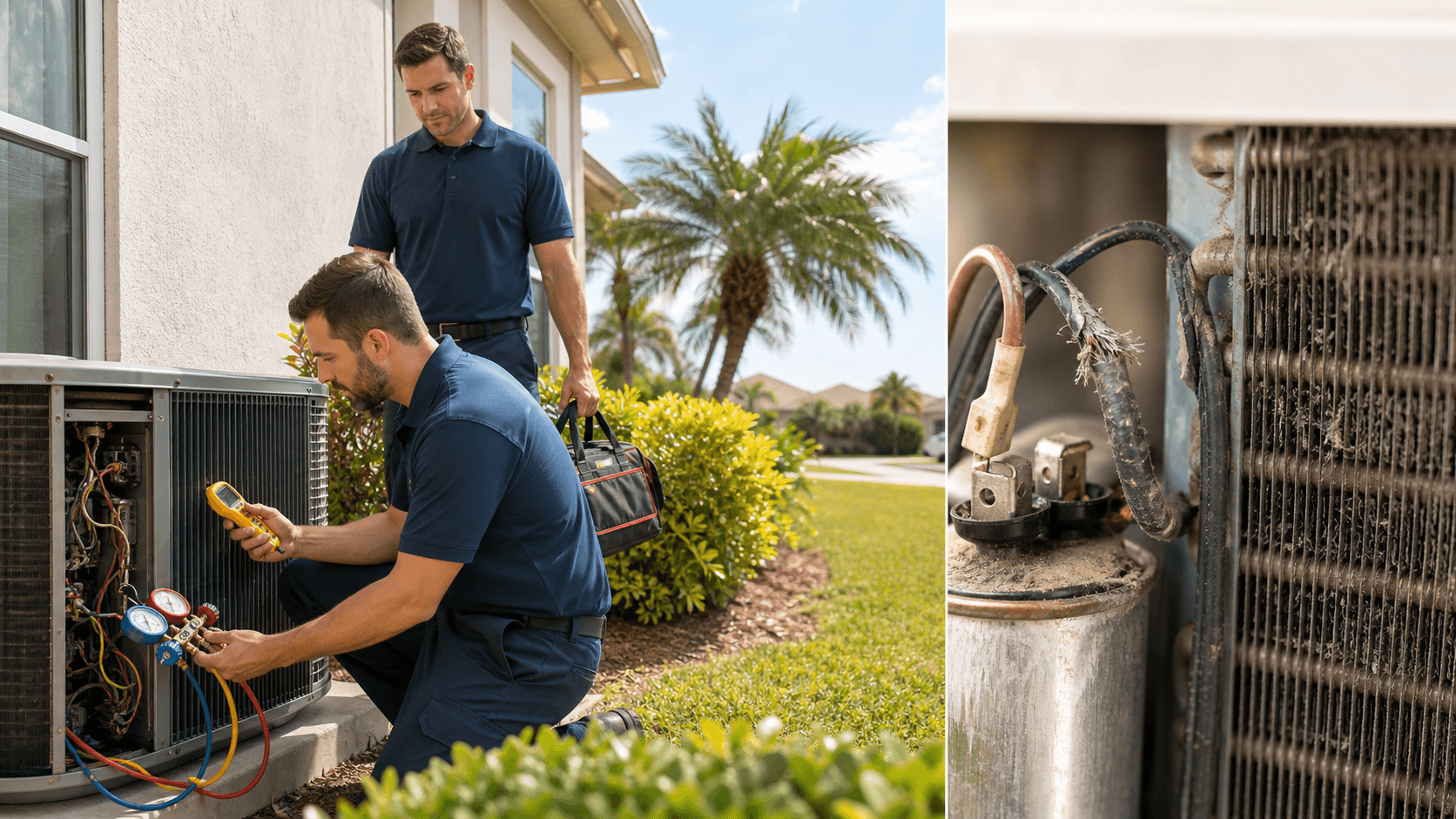
Regular HVAC maintenance in Titusville is one of the best ways to avoid emergencies. A typical professional visit can include cleaning coils, checking refrigerant levels, testing electrical parts, tightening connections, and making sure the system is running safely. When these checks happen in spring or early summer, it is easier to catch small problems before the hottest part of the year and plan ahead if your system is getting older.
Stay Cool All Summer with a Proactive AC Plan
To keep AC trouble from sneaking up on you, remember these key warning signs:
- New or louder noises
- Strange smells, especially burning or electrical
- Weak airflow or hot and cold spots
- Short cycling
- Ice on any part of the system
- Sudden, unexplained jumps in your power bill
Ignoring these signs often turns what could have been a quick fix into a major repair or even a full system replacement, right when you need cooling the most.
A simple proactive plan makes a big difference. Set a reminder to change filters, keep the outdoor unit clear, and pay attention to changes in how your system sounds and feels. Pair that with a yearly professional tune-up, and you are giving your AC the best chance to handle our long, hot Titusville summers. As a local, family-owned HVAC team serving Brevard County, we know how hard the heat, humidity, and salt air can be on your equipment, and we are here to help you stay comfortable and prepared.
Get Started With Your Project Today
Keep your home comfortable and your system running efficiently with professional HVAC maintenance in Titusville. At Ray Brown Air and Heat, we inspect, tune, and clean your equipment so small issues do not turn into expensive repairs. If you are ready to schedule service or have questions about your system, contact us and we will help you choose the best maintenance option for your home.