Stay Cool and Protected When Storms Hit the Space Coast
Storm season on the Space Coast does not care that the calendar says fall. Late October in Brevard County is still hot, sticky, and full of surprise storms that can knock out power without warning. When the grid goes down, your home can heat up fast, and your AC system can take a beating even when it is not running.
HVAC maintenance in Titusville is not the same as in cooler, drier places. Our mix of heat, salty air, lightning, and constant power blips puts extra stress on every part of your cooling system. That is why it pays to think about three things before the next line of storms: getting your AC storm ready, planning backup cooling, and protecting your equipment from surges and post-outage damage.
As a local, family-owned team, we know the storm risks along the Space Coast and how quickly conditions can change. With the right prep, you can keep your home more comfortable, protect your equipment, and get help any time severe weather hits, day or night.
Storm Season Prep for HVAC Maintenance in Titusville
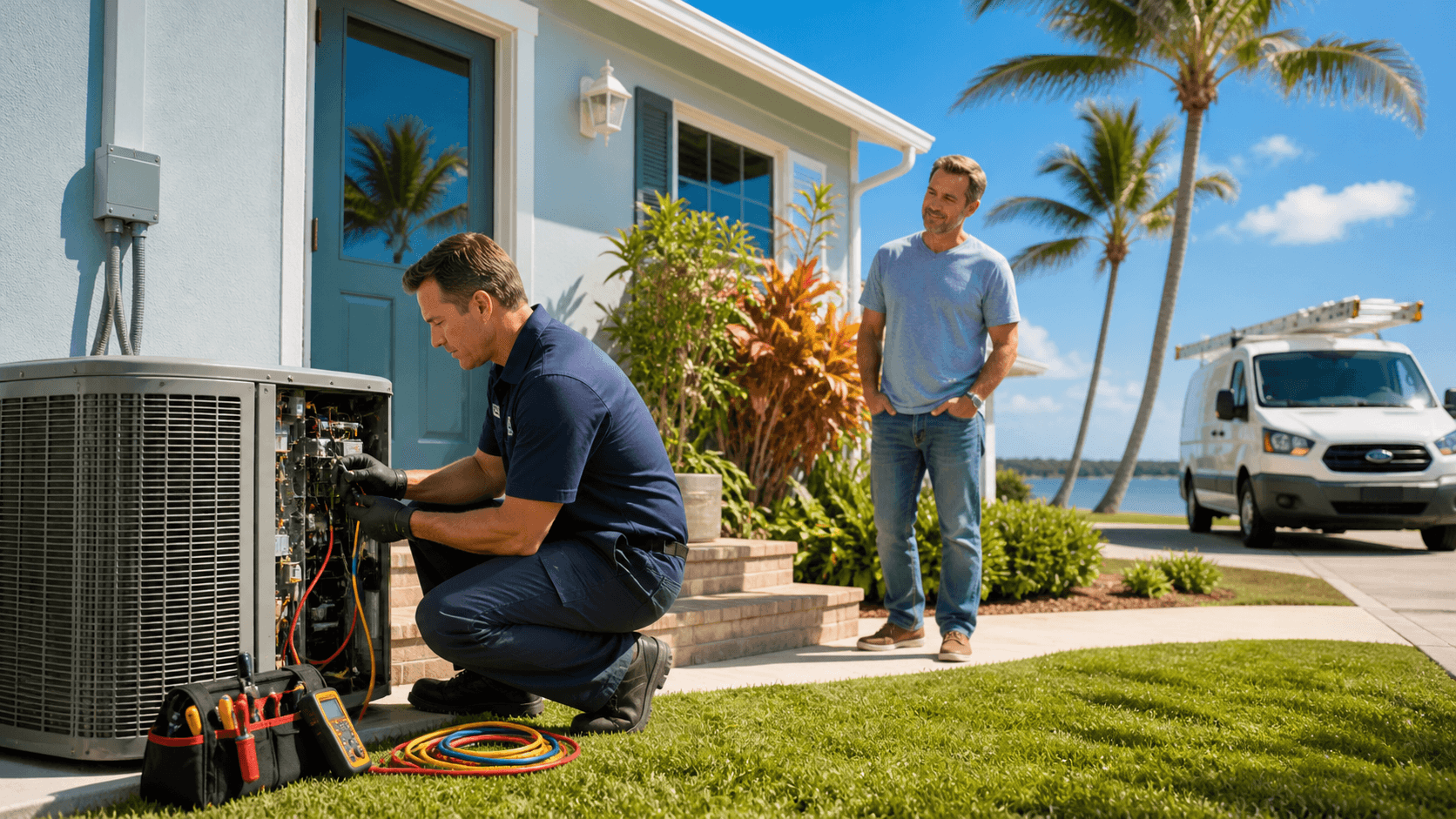
Storm prep for your AC should start before the radar turns red. A quick pre-storm check, done ahead of time by a professional, can reduce surprises when the sky lights up and the wind picks up.
A typical pre-storm inspection includes things like:
- Cleaning or replacing air filters so your system can breathe easily
- Clearing leaves, weeds, and trash from around the outdoor unit
- Checking refrigerant levels and looking for signs of leaks
- Testing thermostat settings and basic system controls
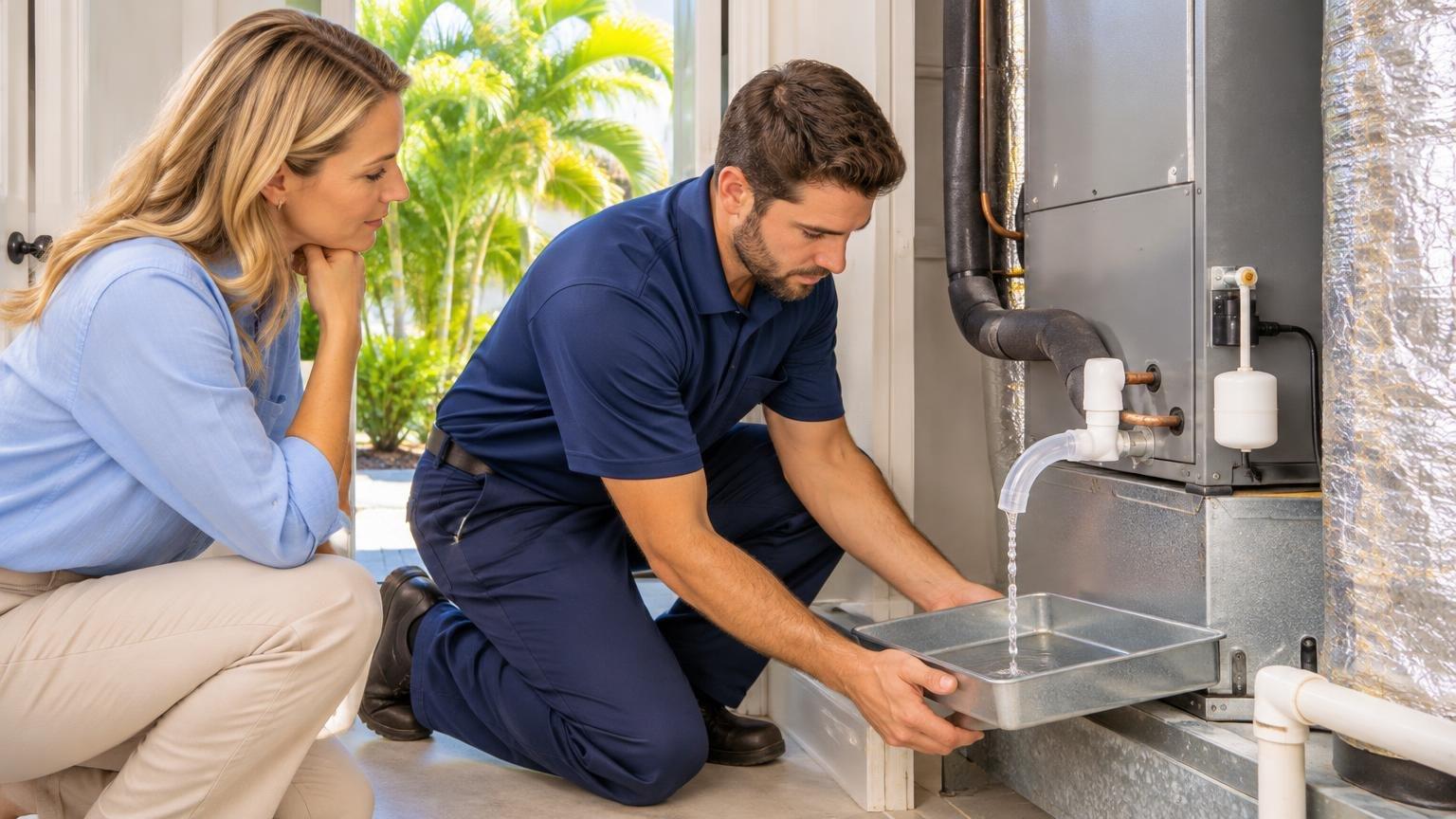
- Making sure condensate drains are clear so heavy rain does not lead to indoor water issues
Our coastal air is salty and humid, and the breeze often carries sand and fine dirt. Over time, that can cause corrosion on coils and metal parts, loosen electrical connections, and wear down components faster than many homeowners expect. Regular HVAC maintenance in Titusville helps catch those small issues before a storm pounds on already weak parts.
It also helps to think about how secure your outdoor equipment is. Before storm season gets too active, a technician can:
- Confirm the condenser is level and firmly mounted
- Check brackets, pads, and fasteners for rust or movement
- Suggest trimming back nearby branches or shrubs
- Talk with you about hurricane tie-downs or protective cages, especially if you are closer to the river or more open areas
When we perform a preseason tune-up, we are not just looking for problems. We are helping your system run more efficiently, which can lower energy use during long stretches of heat and humidity. A tuned-up system is also less likely to quit in the middle of a stormy night when you need cooling the most.
Backup Cooling and Power Options When the Grid Goes Down
In Titusville, power flickers and full outages are a normal part of storm season. Having a backup plan ready before that happens can make a big difference in comfort and safety.
Many homeowners consider generators. Both portable and standby units have their place:
- Portable generators can power a few key items, like a fridge, some lights, and a small cooling unit
- Standby generators are permanently installed and can power larger loads automatically during an outage
- Proper sizing is very important, especially if you want to run central AC, heat pumps, or multiple systems
Using a generator with your HVAC system always calls for professional planning. Safe setups rely on:
- Correct installation of transfer switches so you do not backfeed into the grid
- Matching generator capacity with the starting and running load of your AC or mini split
- Clear plans for which outlets and appliances you will actually use during an outage
When generator power is limited, you might want to lean on alternative cooling strategies. These can include:
- Ceiling fans to keep air moving and make rooms feel cooler
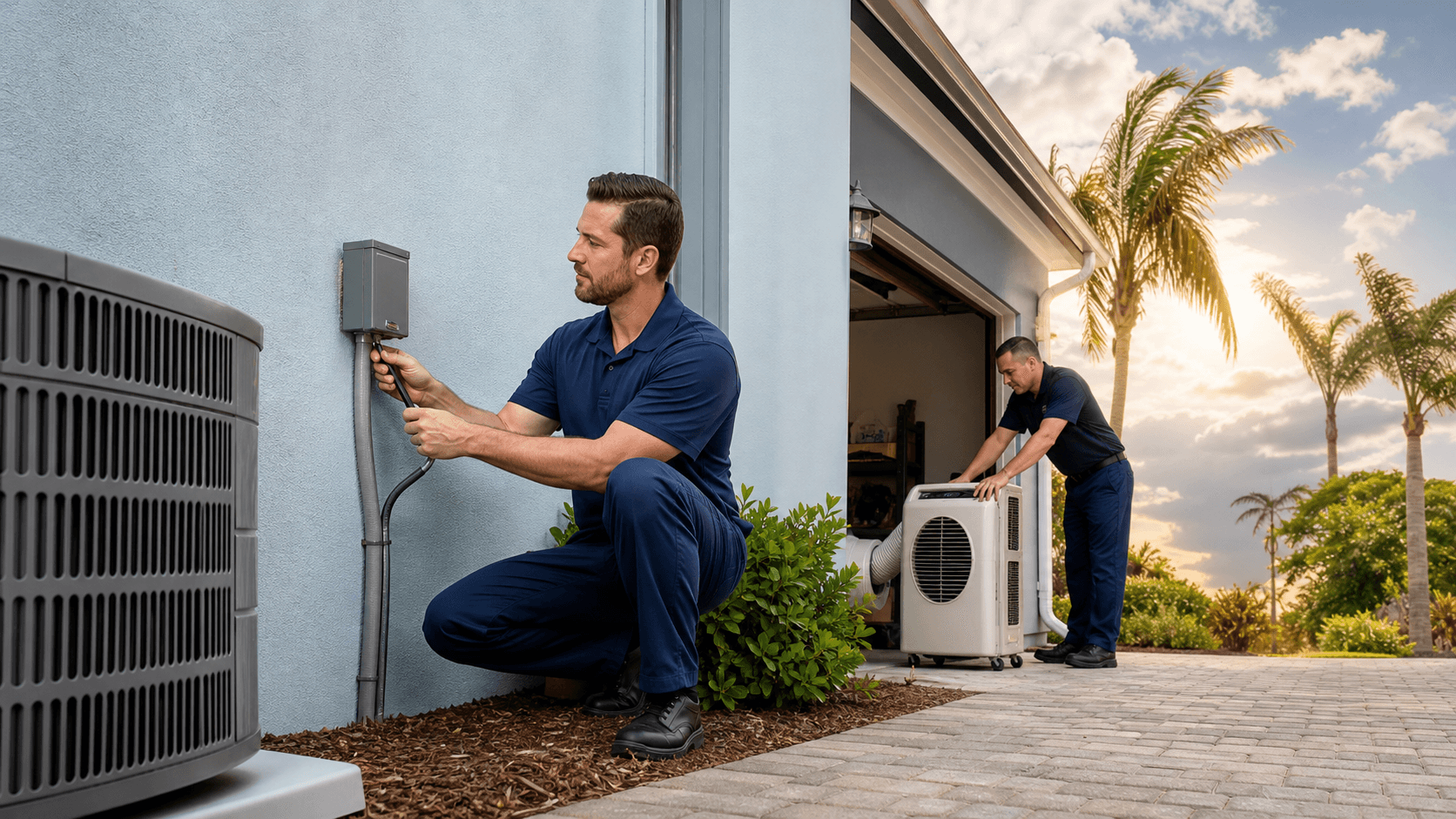
- Spot-cooling with a high-efficiency window unit or portable AC on generator power
- Simple weatherization steps to keep hot air out and cool air in as long as possible
Our team can help you think through generator-compatible HVAC setups, both for homes and light commercial spaces, and talk through realistic backup plans that fit how you actually live and work.
Surge Protection and Electrical Safeguards for Your AC
Central Florida is known for heavy lightning and fast-moving storms. Every strike or grid disturbance can send power surges through your home that may damage circuit boards, compressors, thermostats, and more. Sometimes the system stops working right away. Other times, parts are weakened and fail later.
There are a few layers of protection that can help guard your HVAC system:
- Whole-home surge protectors at the main electrical panel
- Dedicated surge protection at the outdoor condenser and indoor air handler
- Proper grounding and bonding so stray voltage has a safe path away from your equipment
Everyday electrical stress also adds up. Brownouts, quick blips, and utility switching as power is restored after storms can quietly shorten the life of your system. You might not notice anything wrong at first, but sensitive parts can be taking damage each time the lights flicker.
That is why it is smart to have both an electrician and an HVAC technician involved. When we inspect a system, we can:
- Check wiring around the AC and air handler
- Tighten loose connections that can cause overheating
- Inspect contactors, capacitors, and boards for wear or heat damage
- Recommend surge protection options that match your home and local power habits
Smart Post-Outage System Checks Before You Restart
When the power finally comes back, it is tempting to rush to the thermostat and slam it down to cool. Taking a few minutes for simple checks can save your system from more serious damage.
Before you restart your AC, you can:
- Look at the outdoor unit from a safe distance for branches, roof pieces, or other debris
- Check for signs of flooding or sitting water around the equipment
- Listen for any odd buzzing or rattling when power returns to the neighborhood
- Wait several minutes after power is steady again before turning the thermostat back to cool
There are also a few things it is better not to do:
- Do not force the system on while lights are still flickering
- Do not run an AC that has been partially underwater or hit hard by flying objects
- Do not keep resetting a breaker that trips more than once without having it checked
After a storm or outage, certain signs mean you need professional help quickly. Watch for burning smells, warm air from vents, no airflow, smart thermostat error codes, or breakers that will not reset and stay on. In those situations, it is safer to leave the system off until a technician inspects it.
Ray Brown Air and Heat is here for 24/7 emergency calls in Titusville and nearby Brevard communities. When storms hit, we can perform safety checks, look over refrigerant levels, and run careful electrical diagnostics so your system comes back online the right way, not the risky way.
Get Started With Your Project Today
If you are ready to keep your home comfortable and avoid surprise breakdowns, schedule your HVAC maintenance in Titusville with Ray Brown Air and Heat today. Our team will inspect your system, address small issues before they become major problems, and help improve efficiency. To book an appointment or ask a question, simply contact us and we will follow up promptly.