Stay Cool and Protected When Storms Hit Titusville
Storm season around Titusville does not wait for anyone. Late tropical systems, heavy afternoon rains, and loud lightning storms can move in fast and make home comfort feel shaky. If your AC is not ready, a stormy week can turn into a hot, sticky mess inside your house or business.
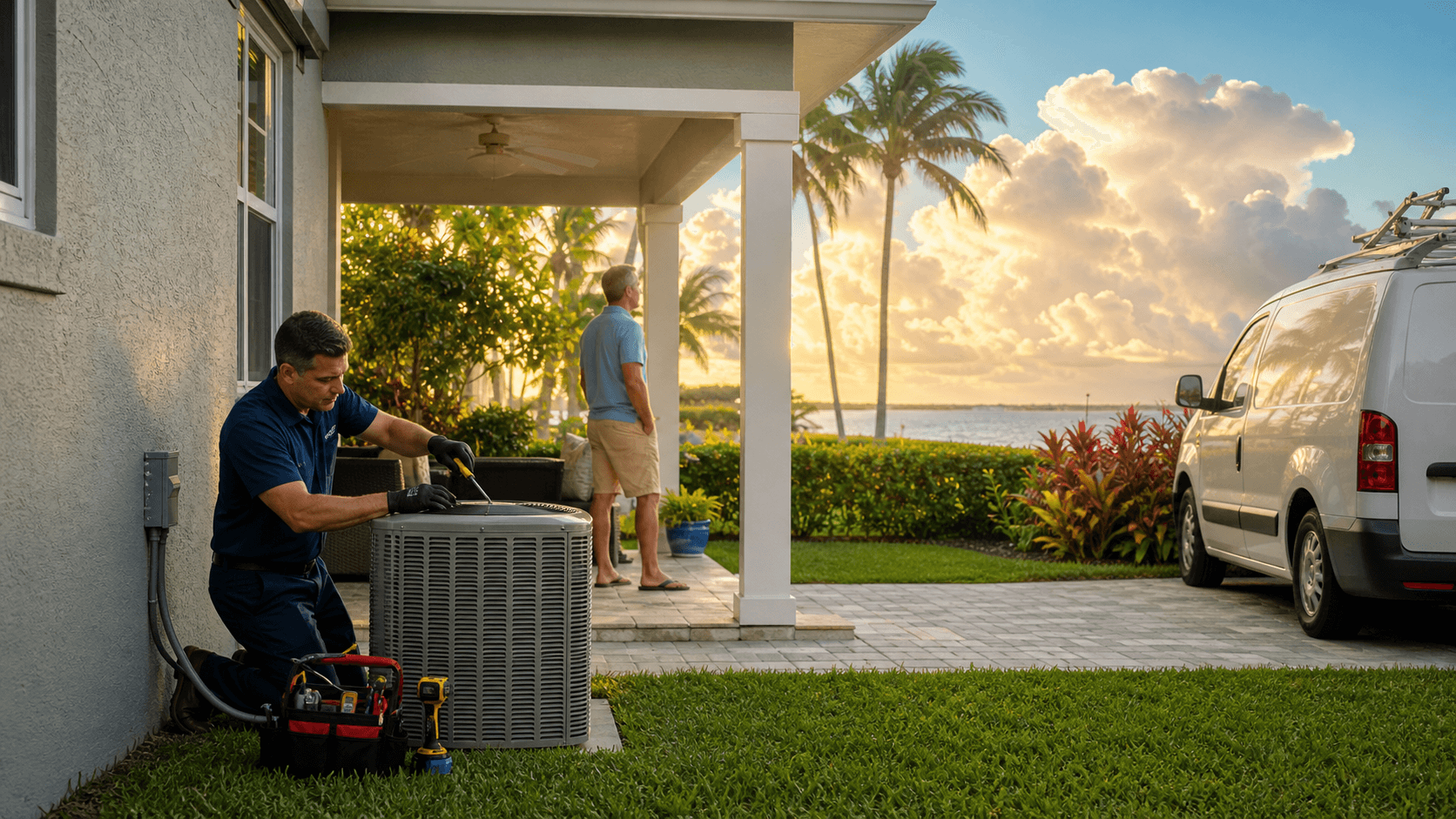
Planning air conditioning service in Titusville before storms ramp up is one of the easiest ways to avoid last-minute stress. A simple tune-up can catch weak parts, loose wires, and drainage problems before rough weather puts extra strain on your system. It can also help keep your home safer when lightning, power flickers, and flooding are in the forecast.
Here, we will walk through how local storms affect your AC, when to schedule service, what storm-ready maintenance looks like, and how to protect your AC, generator, and indoor air quality at the same time.
How Titusville Storm Season Impacts Your AC System
Life on the Space Coast means we get beautiful skies, but we also get strong storms. Those storms can be tough on AC systems around Titusville and the rest of Brevard County.
Common weather threats that can affect your cooling system include:
- Lightning strikes and power surges
- Short power outages and repeated flickers
- Heavy rain and standing water near your outdoor unit
- High winds that carry dirt, leaves, and small debris
- Salt-laden coastal air that can speed up corrosion on metal parts
Storms can strain your AC in a few different ways. Wind can blow dirt and yard debris into your outdoor unit, coating coils and blocking airflow. Heavy rain can overload or clog condensate drains, which may lead to water backing up where it should not be. If your system already has low refrigerant, the mix of high humidity and long run times can push it even harder and bring small issues to the surface.
Electrical problems are also common after rough weather. Power flickers can be hard on compressors, motors, and control boards. Without good surge protection, even a short spike can leave your AC struggling or dead.
After a stormy stretch, it helps to pay attention to how your AC is acting. Warning signs of storm-related damage include:
- Breakers that trip over and over
- New buzzing, rattling, or grinding sounds
- Weak airflow or air that does not feel as cool
- Musty or burnt smells when the system starts
- Energy bills that jump for no clear reason
If you notice any of these, it is time to have a professional check your system before the next round of storms rolls through.
Best Time to Schedule Air Conditioning Service in Titusville
For most Titusville homes and businesses, the best time to schedule air conditioning service is early fall. The hottest summer days have usually passed, kids are back in school, and holiday plans have not taken over the calendar yet. It is a nice sweet spot before late-season storms get more active.
Early fall appointments make it easier to:
- Catch wear and tear from summer
- Get ahead of tropical systems on the radar
- Fix small problems before they turn into emergencies
Weekday, daytime visits are often the best for a full, careful inspection. Technicians can take their time testing electrical parts, cleaning coils, checking refrigerant, and making sure everything is running the way it should. Of course, if a storm hits out of nowhere and your AC quits in the middle of the night, 24/7 emergency service is there for those surprise moments too.
To avoid a rush right before a big storm, many people find it smart to plan air conditioning service in Titusville a few weeks ahead. That way you can pick a day and time that fits your schedule, instead of trying to squeeze into a packed calendar when everyone in town is calling at once.
Storm-Ready AC Maintenance Checklist for Titusville Homes
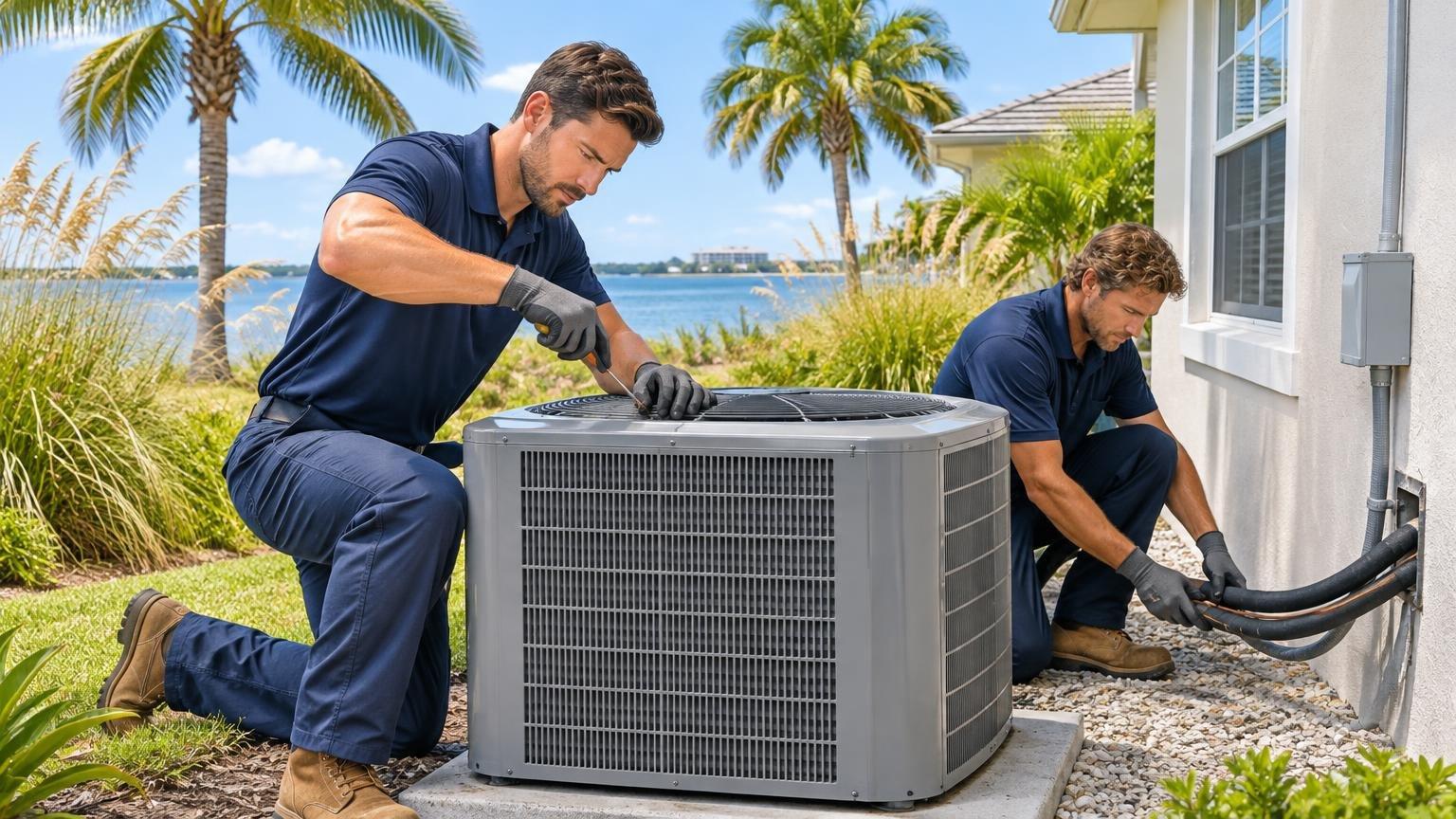
A storm-ready AC system starts with solid maintenance. A professional tune-up before storm season really kicks in should include key steps like:
- Cleaning indoor and outdoor coils
- Checking refrigerant levels and temperatures
- Tightening electrical connections and testing controls
- Clearing and flushing condensate drains
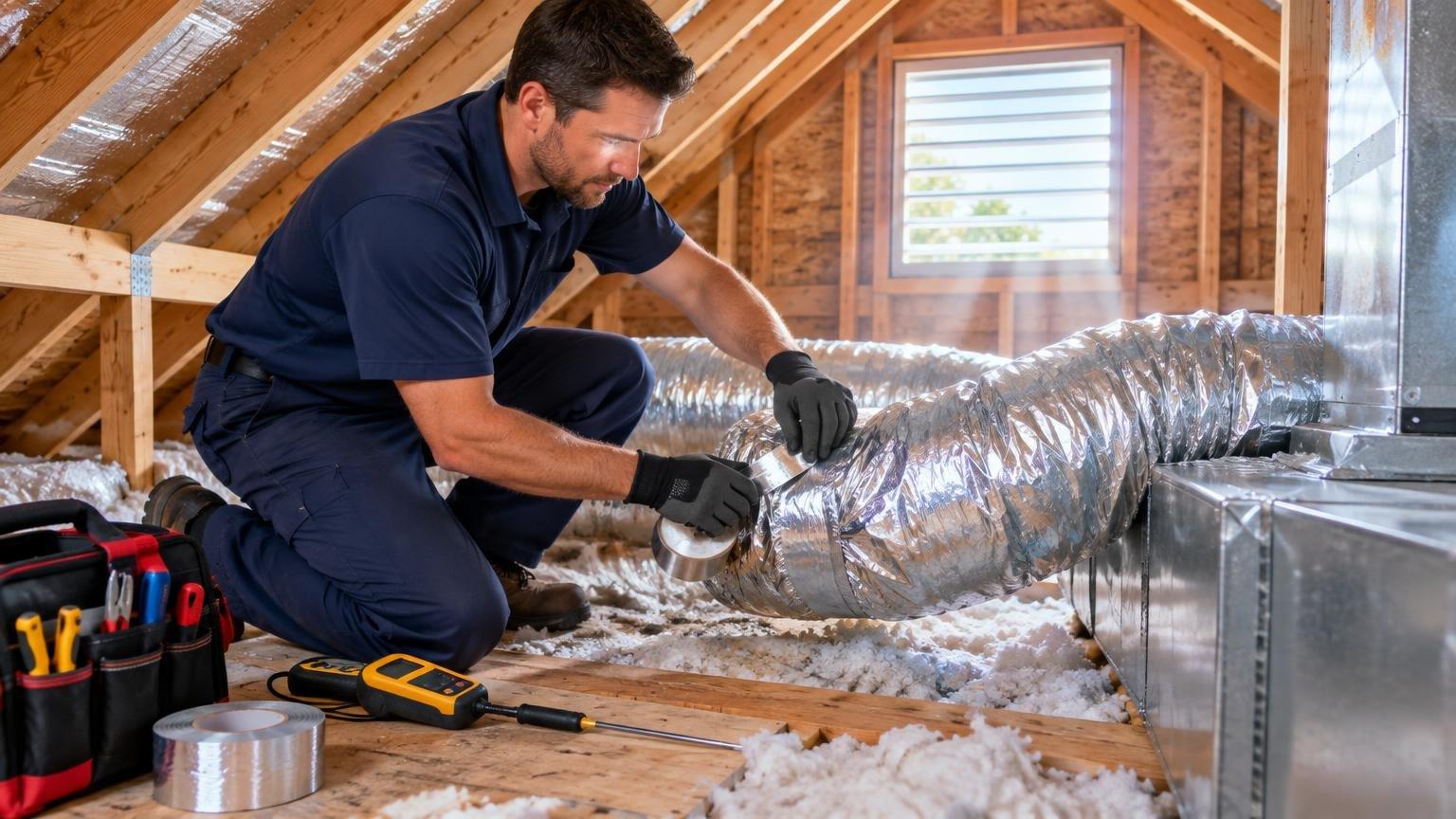
- Inspecting ductwork for obvious leaks or damage
For Titusville homes that see a lot of storms, we also pay close attention to storm-specific protection, such as:
- Verifying that surge protection is in place and works
- Confirming the outdoor condenser is level and secure
- Checking drainage around the pad so water does not pool
- Making sure nearby plants, branches, and loose items are trimmed or removed
There are also simple things homeowners can do around storm time. If flooding in your yard seems likely, it is usually safer to turn the system off so the outdoor unit is not running while sitting in deep water. After high winds, a quick visual check for branches, leaves, or trash around the unit can stop problems before they grow.
If a breaker for your AC keeps tripping, avoid resetting it over and over. That can signal a deeper electrical or mechanical issue that needs a trained technician to inspect it safely.
Protecting Your AC, Generator, and Indoor Air Quality
Storms do not just threaten comfort; they can affect safety and indoor air quality too. When power goes out, a whole-home generator with proper electrical work can keep AC, refrigeration, and key lights on, which makes a big difference during long outages. Both the generator and the AC should be inspected before storm season so they work well together.
Indoor air can suffer during and after storms as well. Closed windows, extra moisture, and long AC run times can lead to:
- Higher humidity and sticky rooms
- More mold and mildew risk
- Stale or musty smells
- Extra dust and allergens in the air
Tools that help keep air cleaner and drier include quality filters, UV lights, and dehumidification equipment. When these pieces are set up correctly, they can work with your AC instead of fighting against it.
It is helpful to plan service for AC, generators, and indoor air quality equipment at the same time. That way, a technician can look at how all the systems connect, make sure the electrical load is handled safely, and confirm that your home is ready for long outages or long, humid stretches after a storm passes.
Choosing a Titusville HVAC Partner You Can Trust in a Storm
When the radar is lit up, you want to know you have a local HVAC team you can count on. A good Titusville provider should offer:
- 24/7 emergency service for surprise breakdowns
- Real experience with Brevard County's storm patterns
- Proper licensing and insurance
- A solid reputation for honest, clear recommendations
Working with a family-owned company can be a big comfort during storm season. Local teams know the neighborhoods, the common AC brands in the area, and the typical issues that pop up after our afternoon thunderstorms and tropical systems. They also understand how important it is to keep homes and businesses cool when everything outside feels unsettled.
Maintenance plans are another helpful layer of protection. When tune-ups are set on a regular schedule, your AC, generator, and indoor air quality systems stay checked, cleaned, and adjusted all year. Priority scheduling and repair discounts that often come with plans can make storm prep feel less stressful and more like a normal part of caring for your home.
With a little planning and the right support, air conditioning service in Titusville can turn storm season from something you dread into something you are ready to handle.
Restore Comfort With Reliable Cooling Solutions Today
If your system is struggling to keep up, now is the perfect time to schedule professional air conditioning service in Titusville with Ray Brown Air and Heat. We will inspect your equipment, address any issues, and help improve efficiency before small problems turn into costly repairs. To schedule a visit or ask questions about your system, simply contact us and our team will follow up promptly.