
Get Your Rockledge Home Ready for a Smooth Install Day
Planning HVAC installation in Rockledge during late-summer is all about staying ahead of the heat and humidity. When your system is sized and installed the right way, your home feels cooler, your air feels less sticky, and your energy use stays under control. A little prep before install day helps everything go faster and keeps you from dealing with surprise problems later.
Good planning covers more than just picking out a new AC. Permits, load calculations, and duct testing all work together so your new system runs the way it should. When those pieces are handled before the crew shows up, you avoid delays, repeat visits, and comfort issues that show up on the hottest afternoons.
As a local, family-owned team serving Brevard County, we know Rockledge homes, from older block houses to newer builds. We work with local codes and weather every day, so we understand how to set expectations and guide you through a professional HVAC installation from start to finish.
Permits and Local Codes You Should Understand
In Rockledge and the rest of Brevard County, HVAC installation is not just a quick swap. Permits are part of the process. They help make sure the system is safe, meets Florida Building Code, and protects you if you ever need to show work was done correctly for insurance or a future home sale.
You do not have to handle the permit work yourself. With a qualified contractor, you can expect help with pulling the correct HVAC permit for your project, coordinating required inspections with the local building department, matching equipment and materials to local code and energy rules, and keeping records of paperwork for your files.
Inspections are a normal part of HVAC installation in Rockledge, and an inspector will usually check specific safety and code items, including:
- Electrical connections and breakers
- Clearances around the indoor and outdoor units
- Condensate drain lines and where they discharge
- Refrigerant line routing and insulation
You can help the process by keeping access clear to the air handler, outdoor unit, electrical panel, and attic or crawl spaces. If inspectors can move around safely and see all the equipment, the visit tends to go faster and has fewer issues.
Why Load Calculations Matter for Comfort and Bills
A load calculation is the step that decides how big your new HVAC system should be. It is not a guess off your square footage, and it is not just matching your old unit. It is a room-by-room math process that looks at how your home actually gains heat.
To do that accurately, a proper load calculation usually checks:
- Floor area and ceiling height
- Insulation levels in walls and attic
- Window size, type, and direction they face
- Sun exposure and shade from trees or nearby homes
- Number of people and typical use of each room
If someone sizes a system by rule of thumb, you can run into problems. An oversized system may cool the air fast but shut off too quickly, which can leave humidity high and create hot and cold spots. It can also start and stop more often, which can wear parts out faster. An undersized system can run almost nonstop and still struggle on those long, hot afternoons.
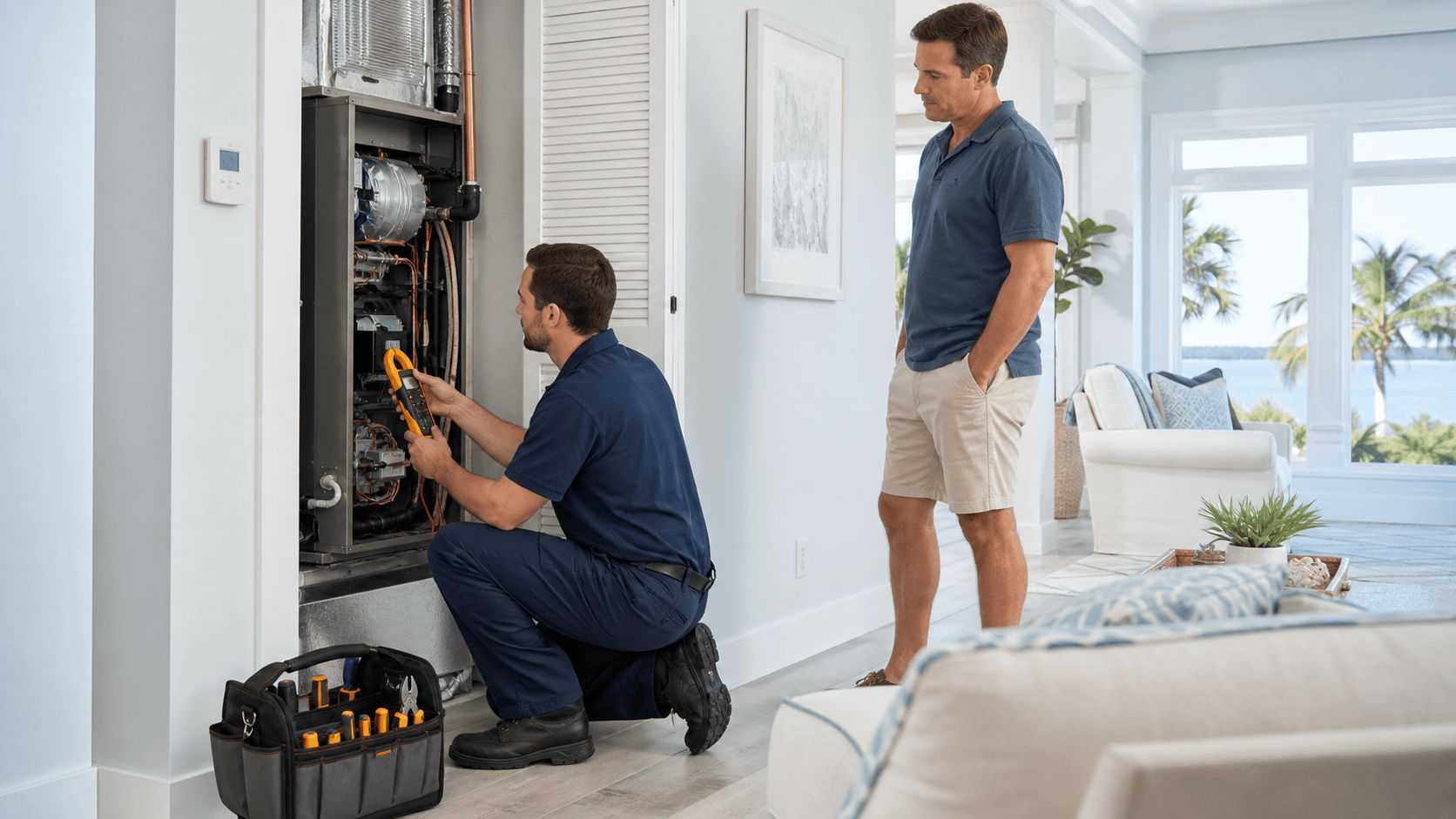
During a load calculation visit, a technician will usually walk through each room and take basic measurements, look in the attic to see the insulation levels and the duct layout, check window types, doors, and sun-facing walls, ask about rooms that feel stuffy or uncomfortable, and talk through your comfort preferences, like cooler bedrooms or better humidity control. When the math is done, you end up with equipment sized for your home instead of a guess based on a quick glance.
Duct Testing and Sealing Before Your New System
Your ductwork is the path your cooled air has to travel. If the ducts are leaky, too small, or poorly laid out, even the best new equipment will not give you the comfort you expect. In many Rockledge homes, ducts run through hot attics, so leaks can waste a lot of cooled air.
Duct testing helps find those weak spots. A duct blaster or similar tool is attached to the system to pressurize the ducts. Then the technician measures how much air is leaking out. They also often inspect joints, boots, and plenums for gaps or loose connections, check for crushed or sagging duct runs, look for uninsulated or poorly insulated sections, and measure airflow at supply registers and return grilles.
Based on what they find, your installer might recommend specific fixes or upgrades such as:
- Sealing duct joints and seams
- Repairing or replacing damaged or crushed sections
- Adding or resizing return ducts for better airflow
- Adjusting duct layout to help balance rooms
Doing this before or during HVAC installation in Rockledge helps your new system cool more evenly and can reduce strain on the equipment.
What Happens on Your HVAC Install Day
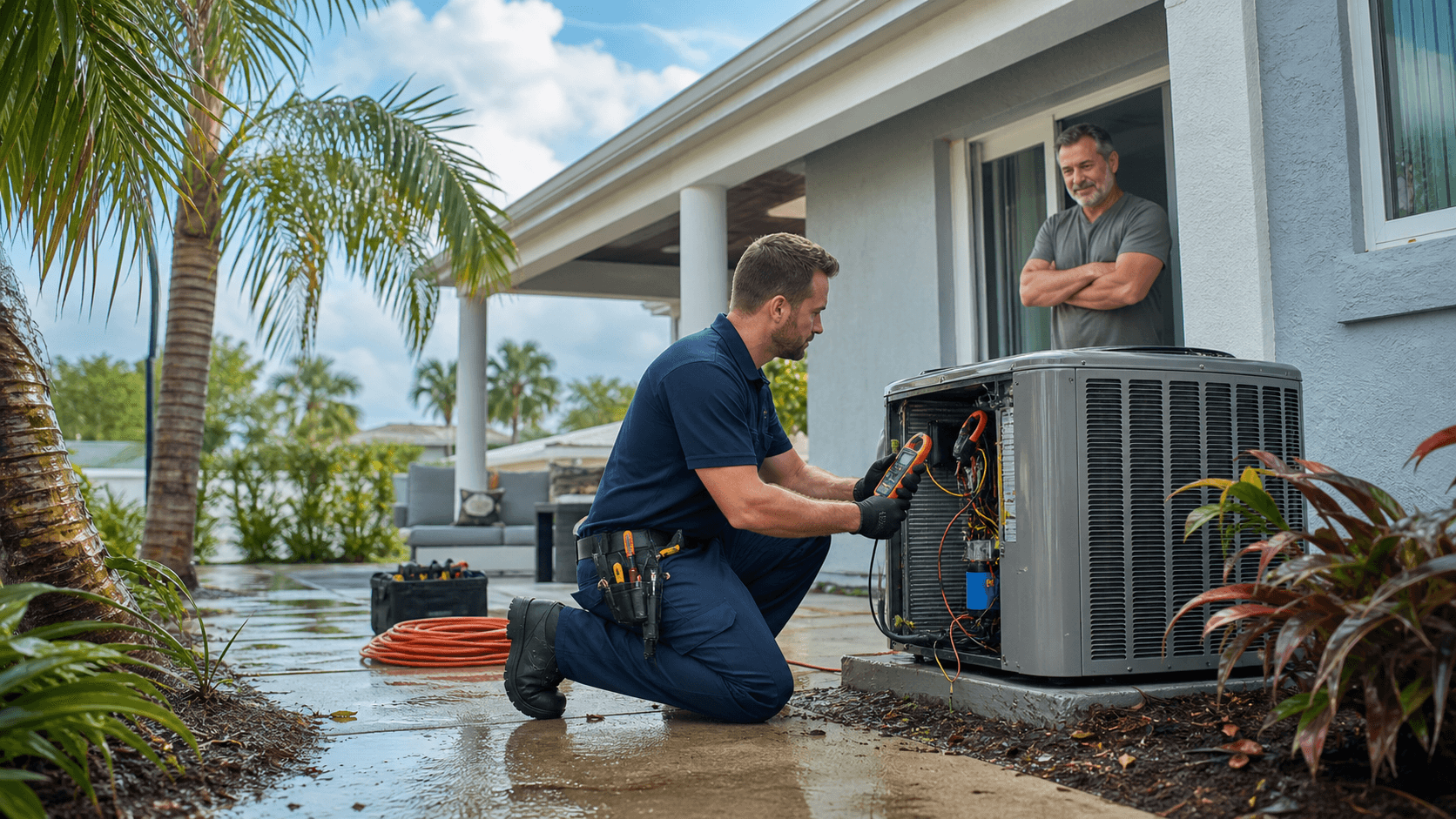
On install day, you can expect a clear process from start to finish. There is usually an arrival window in the morning. The crew will park, walk the job with you, and then bring in equipment and materials. Many teams lay down floor protection and move small items so work zones stay neat.
Typical early steps include:
- Shutting off power to the old system
- Protecting floors and nearby furniture
- Removing the old indoor air handler or furnace
- Recovering refrigerant from the old outdoor unit, then removing it
Once the old system is out, the new system goes in. Key steps often look like this:
- Setting the new outdoor condenser on a proper pad
- Setting or hanging the new air handler inside
- Connecting refrigerant lines and insulating them
- Installing or reconnecting the condensate drain
- Wiring the thermostat and control lines
- Pulling a vacuum and charging the system with refrigerant
- Checking airflow, temperature split, and safety controls
There will be some normal noise from tools and moving heavy equipment. You can help the day go smoother by following a few practical tips:
- Clearing access to the indoor unit, outdoor unit, and attic hatch
- Moving fragile items away from work paths
- Securing pets in a separate room or area
Your home will be without cooling for part of the day while the old system is out and the new one is being connected. In many cases, you can expect cool air again before the crew leaves for the day, even during peak summer heat.
Final Walkthrough, Paperwork, and Long-Term Care
Once everything is running, a good installer will walk you through your new system. This is your chance to get familiar with the equipment and ask questions while the technician is still on site.
During the walkthrough, you will usually see:
- Where your main air filter or filters are located
- How to remove and replace the filters
- How to operate your thermostat, including basic schedules
- Where the main breaker and indoor unit shutoff are
- How to adjust settings to help with humidity and comfort
On the paperwork side, you should expect:
- Information on manufacturer warranties for your equipment
- Details on any workmanship guarantees from the installer
- Confirmation that permits will be closed after inspections
- Any forms related to rebates or financing, if those apply to your project
To keep your new system running well, ongoing care matters. That usually includes routine professional tune-ups at regular intervals and regular filter changes based on your filter type and home conditions. It also helps to talk with your technician about options like better filtration, UV lights, or dehumidifiers if you want improved indoor air quality.
With the right prep, testing, and follow-through, HVAC installation in Rockledge can be a smooth process that leaves your home more comfortable and easier to cool for years to come.
Improve Your Home Comfort With Expert HVAC Installation
If you are ready to upgrade your system, we are here at Ray Brown Air and Heat to help you plan a reliable and efficient HVAC installation in Rockledge. Our team will walk you through equipment options, answer your questions, and schedule work at a time that fits your routine. Reach out today through our contact page so we can get your home feeling comfortable again.