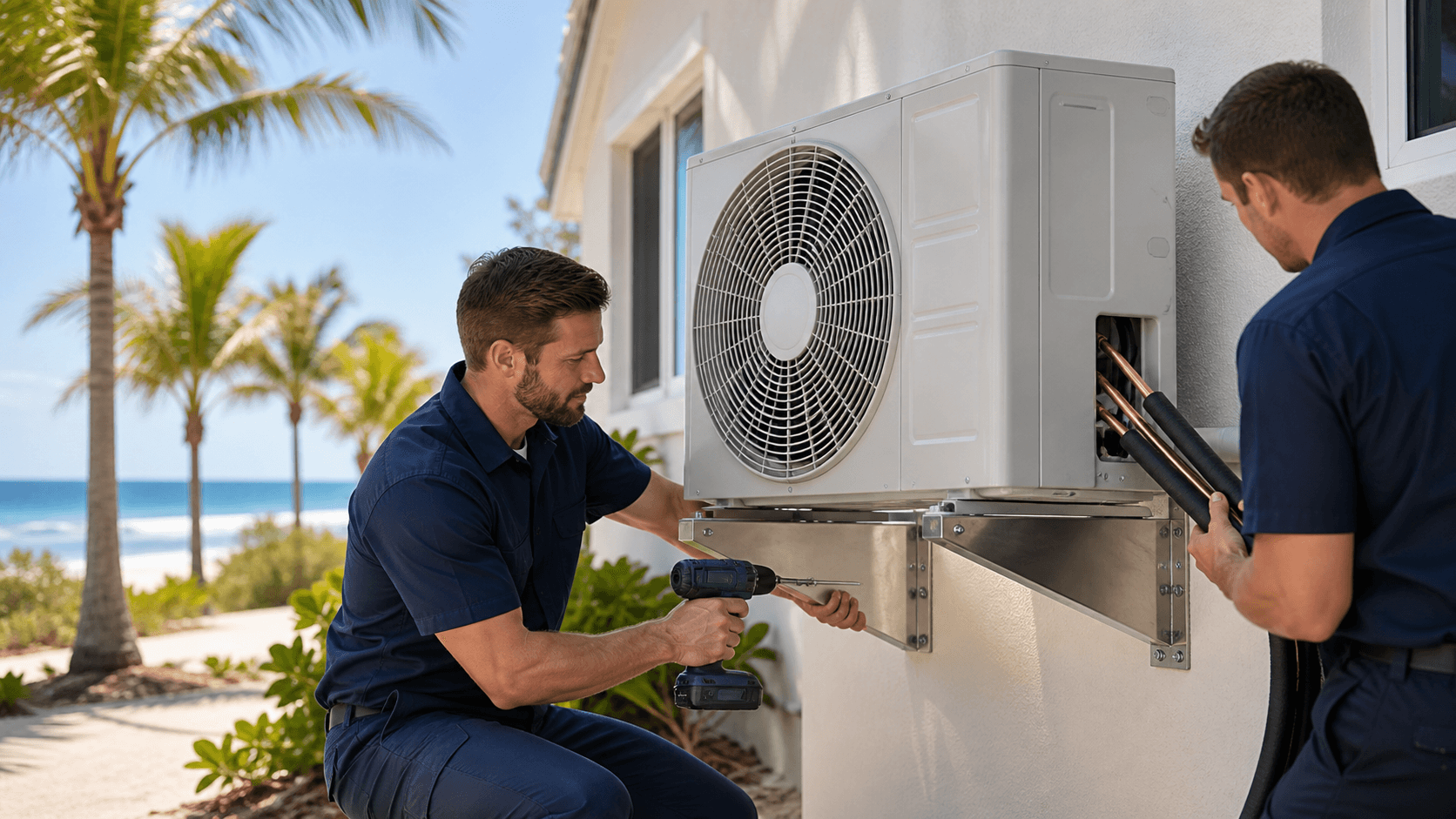
Coastal-Ready Comfort for Rockledge Homes
AC installation in Rockledge is different from installing a system in a dry, inland town. Our homes sit close to the Indian River Lagoon and not far from the Atlantic, so our equipment lives in salty, humid air almost every day. That nice sea breeze feels great to us, but it is rough on metal, electronics, and moving parts.
If you want your next AC to last, it takes more than picking a good brand. The materials, protective coatings, and even where the outdoor unit sits on your property all play a big role in how long it runs before trouble starts. In this guide, we walk through what matters for coastal homes, so you can ask better questions, protect your investment, and be ready before the next heat wave or late-season storm hits Brevard County.
How Salt Air Attacks Your AC System
Salt does not just sit on the surface of your AC; it reacts with metal and slowly eats into it. When you mix salty air with our high humidity, the outdoor unit almost never gets a break. Moisture helps salt cling to coils, screws, and cabinet panels, and that speeds up corrosion.
Over time, this can cause problems like:
- Pitted or leaking coils
- Rusted fasteners that snap during service
- Cabinet panels that weaken or develop holes
- Fins that crumble and stop moving air well
On top of that salty air, your system also has to deal with strong UV, heavy rain, and wind-driven storms. During hurricane season, gusts can push salty mist deep into the equipment, into places that are hard to reach and hard to clean. That mix of salt, water, and sun breaks down paint, coatings, insulation, and wiring.
All of this shows up in real ways you feel:
- More frequent breakdowns and repair visits
- Higher energy bills because the system has to work harder
- Having to replace your system years earlier than you expected
When AC installation in Rockledge is not planned with coastal conditions in mind, the unit might work fine at first but age fast. A little thought during design can prevent a lot of early failure later.
Corrosion-Resistant AC Materials That Last Longer
You cannot stop salt in the air, but you can choose equipment and parts that stand up to it better. The right materials slow corrosion and keep your system running longer and cleaner.
Here are key components to ask about:
- Linesets: Copper or cupronickel linesets resist corrosion better than plain steel. They are less likely to develop leaks where salt and moisture collect.
- Coils: Aluminum coils with factory epoxy or similar coatings handle salt exposure better than bare copper in many coastal setups. Coastal-grade coils are made with coatings that seal the metal from direct attack.
- Fasteners: Stainless or coated screws, nuts, and brackets last much longer than standard uncoated steel hardware that can rust in just a couple of seasons.
- Cabinet materials: UV-stable, powder-coated or painted cabinets keep their finish longer and protect the steel underneath from rust and chipping.
Standard materials might do fine in a mild inland climate for 5 to 10 years. In Rockledge, those same materials can look worn in far less time. Coastal-grade parts usually cost a bit more up front, but they tend to:
- Keep a tighter seal on refrigerant
- Hold up better during storms
- Need fewer panel and hardware replacements
Working with a local, family-owned HVAC team that lives here and understands Brevard County helps. We see how equipment ages near the lagoon, on the barrier island, and in neighborhoods exposed to river breezes. That lets us match materials from the pad to the coils and fasteners, not just the main unit itself.
Coastal-Grade Coatings and Protective Treatments
Materials are the first line of defense; coatings are the second. Coastal-grade coatings act like a raincoat for the metal surfaces on your AC, so salt, sand, and moisture do not touch bare metal as easily.
Common options you may hear about include:
- Epoxy coatings: Thick, durable layers that seal coils and metal from airborne salt.
- Phenolic coatings: Tough finishes often used on coils in extra-harsh marine spots.
- Polyurethane coatings: Flexible films that resist chipping and hold up well under UV.
These coatings make the most sense for:
- Homes within a few miles of the river, canal, or ocean
- Waterfront and riverfront properties
- Spots where wind usually blows straight off the water
Coatings can be applied two ways. Factory-applied coatings are baked on under controlled conditions and tend to be the most uniform. Field-applied coatings can work well too, but they need careful prep, the right thickness, and time to cure.
To keep coatings doing their job, it helps to:
- Rinse coils and cabinets gently as part of regular maintenance
- Recoat as needed when surfaces show wear or chipping
- Have a pro check that coated parts are not blocked, bent, or peeling
When coatings are planned from the start and maintained over time, they are one of the best tools we have to fight salt air.
Smart Placement Strategies for Rockledge AC Installation
Smart AC installation in Rockledge is not only about what you buy, it is also about where you put it. Placement can cut down direct salt exposure, rain intrusion, and flood risk.
Good outdoor unit locations usually:
- Sit away from direct river or ocean-facing winds, such as behind a corner or fence that still allows airflow
- Are raised above spots where water tends to pool during heavy rain
- Have 12 to 24 inches of clear space on all sides for proper air movement
Simple add-ons make a big difference too:
- Corrosion-resistant stands keep the unit off damp concrete and away from splash-up
- Wind-rated hurricane pads help keep the unit anchored during strong storms
- Protective cages guard against flying debris and theft without choking airflow
- Roof or wall mounting can be helpful where yards flood or space is tight
The goal is to balance protection and performance. The unit should breathe easily while still being guarded from salt spray, standing water, and yard debris as much as the site allows.
Partner with Local Pros Before the Next Heat Wave
The best time to talk about materials, coatings, and placement is before trouble starts, not when the unit has already been damaged. A pre-season visit in late winter or early spring gives time to review your current setup, check for corrosion, and plan any upgrades before the long, hot days return.
Ray Brown Air and Heat is a local, family-owned HVAC company that works every day in Brevard County's coastal conditions. We work with 24/7 service, same-day repairs when possible, and flat-rate pricing. We understand what salt, humidity, and storms do to equipment here. When you are ready to look at AC installation in Rockledge, you can ask us about coastal-grade materials, coatings, and placement options, and we can build a plan around your home and your comfort.
Get Started With Your Project Today
If you are ready for reliable comfort in every season, our team at Ray Brown Air and Heat is here to help with expert AC installation in Rockledge. We will walk you through the options, answer your questions, and recommend the right system for your home and budget. To schedule your visit or request a quote, simply contact us and we will follow up promptly.