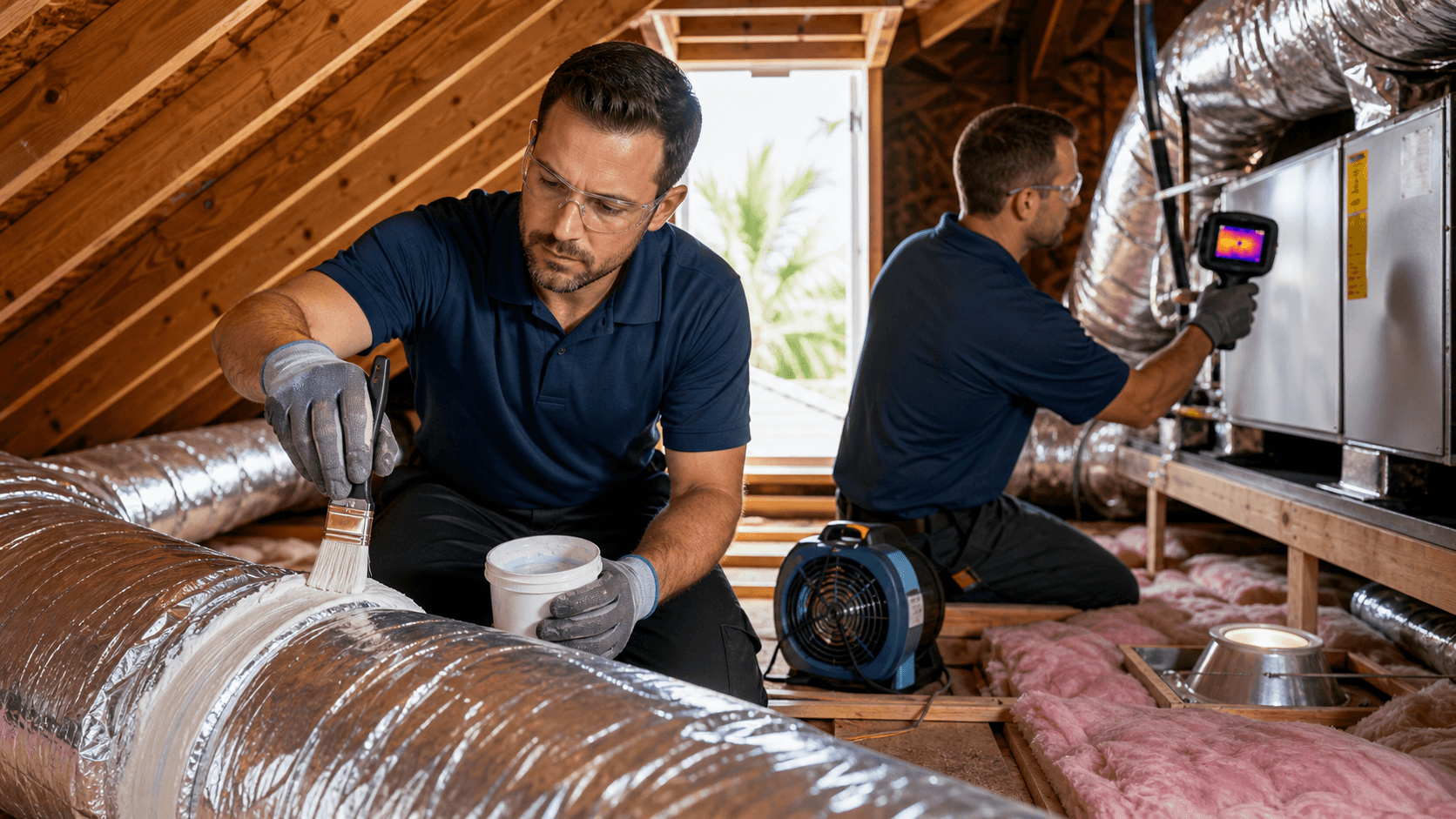

Air conditioning service reports can look like another language. There are numbers everywhere, short notes in the margins, and terms that sound like code. When your home in Titusville is already warm and sticky, the last thing you want is to feel confused about what is going on with your AC.
We want to help you feel confident instead of stressed. When you can read your service report, you can spot early warning signs, avoid surprise breakdowns, and understand which repairs really matter for comfort during a long Florida summer. We will walk through the notes, explain superheat and subcool in simple terms, and show you how to sort repairs from "handle soon" to "can wait."
Decode Your AC Service Report Like a Pro
Many homeowners look at their AC report once, then tuck it in a drawer. The trouble is that paper is a snapshot of how your system is doing right now. When you know what you are looking at, it becomes a powerful tool.
In this guide, we will focus on what common technician notes and abbreviations really mean, how to understand superheat and subcool readings, and how to decide which recommended repairs come first. We will keep the language simple so you can follow along without needing a toolbox or a textbook.
What Your Technician Notes Are Really Telling You
Service reports are full of shorthand to save time. A few you may see during air conditioning service in Titusville include:
- SH: Superheat
- SC: Subcool (subcooling)
- Delta T: Temperature difference between return and supply air
- RLA: Rated load amps, how many amps a motor should pull
- LRA: Locked rotor amps, a surge when a motor starts
- Cap: Capacitor
- Contactor: The electrical switch that controls the compressor or fan
- Evap: Evaporator coil inside the house
- Cond: Condenser unit outside
On most reports, there are two types of notes: observed condition notes and recommendation notes. Observed condition notes describe what the tech saw or measured. For example, "Cap weak" means the capacitor is not holding the charge it should, "Coil impacted" means the coil is dirty or clogged with debris, "Fan motor noisy" means bearings may be wearing out, and "Refrigerant level low" means there may be a leak or charge issue.
Recommendation notes tell you what the tech suggests you do about the condition they found. These often read like "Recommend replacing capacitor soon," "Recommend cleaning evaporator coil," or "Recommend leak search."
Pay attention to the priority language, because it tells you how urgent something is. "Monitor" means it is OK for now, but keep an eye on it at the next visit. "Recommend replacement soon" means it is wearing out and could fail in the near future. "Urgent" means it needs attention right away to avoid damage or loss of cooling. "Unsafe to operate" means you should not run the system until it is fixed.
If any note is unclear, it is always fine to ask the technician to walk you through it in plain words before they leave.
Understanding Superheat and Subcool Measurements
Superheat and subcool are two of the most important numbers on an AC report, especially in our hot and humid climate. They tell the technician how the refrigerant is moving through the system and if the charge and airflow are in a healthy range.
Superheat is the temperature of the refrigerant vapor above its boiling point as it leaves the evaporator. In simple terms, it tells us how fully the refrigerant boiled off inside the indoor coil. High superheat can point to low refrigerant, dirty filters or coils, or airflow problems. Low superheat can point to an overfed coil, a stuck TXV (the valve that controls refrigerant flow), or other control issues.
Subcool is the temperature of the liquid refrigerant below its condensing temperature as it leaves the outdoor coil. It shows how much heat the refrigerant has given up outside before heading back in. High subcool can point to an overcharge of refrigerant or a restriction in the system. Low subcool can point to low charge or a condenser that is not rejecting heat well.
These numbers matter so much for homes in Titusville, especially late in summer, because they influence real comfort and system behavior, including:
- How fast your home cools down
- How well your system pulls moisture out of the air
- How hard your compressor has to work
- How often you hear your system cycling on and off
When superheat and subcool are in the target range for that specific system, it usually means better comfort, more stable humidity, and less strain on expensive parts.
How to Prioritize Repairs on Your AC Report
Once you understand the notes and numbers, the big question is what you should fix first. We like to think in three layers: safety and system-saving repairs, performance and comfort items, and nice-to-have upgrades and preventive work.
First come safety and system-saving repairs. These are items that protect people and prevent major damage:
- Burned or loose electrical connections
- Failing capacitors or contactors with signs of overheating
- Confirmed refrigerant leaks or very low charge
- Issues with safety switches or float switches on the drain line
Next are performance and comfort items. These might not be emergencies today, but ignoring them can lead to higher bills and hot rooms:
- Dirty evaporator or condenser coils
- Weak capacitors without visible damage yet
- Unusual superheat or subcool readings, especially when paired with comfort complaints
- Clogged or slow drain lines
Then come nice-to-have upgrades and preventive work:
- Wi-Fi or programmable thermostats
- Surge protectors for the outdoor unit
- Hard start kits in some situations
- Duct improvements to fix hot or cold spots
Often, it makes sense to group some of these lower-priority items with your next scheduled air conditioning service in Titusville so you can reduce repeat visits.
Comparing Quotes and Avoiding Surprise Costs
If you receive more than one quote, your service report can help you compare them fairly. Start by matching each line item, because every part listed on a quote, like a capacitor, contactor, blower motor, or drain repair, should also appear as a note or finding on the report. If it is not clear, ask what each part does and why it is needed.
To compare quotes apples to apples, look at:
- Whether both companies are aiming for similar superheat and subcool ranges on the finished system
- The type and size of parts being used, not just the name
- Any warranty on parts and labor
- Whether both include the same cleanup steps, like vacuuming lines or cleaning coils
There are also times when a second opinion is a smart move:
- When two quotes give very different reasons for the same problem
- When no measurements, like superheat, subcool, or Delta T, are written on the report
- When you feel rushed to approve a major repair or full replacement the same day without clear explanations
Make Your Next Titusville AC Visit Work Harder for You
Your AC reports do not have to be one-time paperwork. They can be a simple maintenance roadmap for your home. Keep them in a folder and look for patterns, like:
- Superheat or subcool values that drift the same way each visit
- Notes that repeat, such as "coil dirty" or "drain clogged" every time
- Comments about age, rust, or wear that show your system is getting close to the end of its life
Before each visit, write down a short checklist of any hot rooms, strange sounds, smells, or changes in your energy bills, plus anything from past reports you want explained. That way, when your technician from Ray Brown Air and Heat is at your Titusville home, you can walk through the report together and feel clear about what is happening and which repairs make the most sense now versus later.
Get Reliable Comfort With Expert AC Service Today
When your home is too hot to handle, we are ready to help restore your comfort quickly and correctly. Schedule trusted air conditioning service in Titusville with Ray Brown Air and Heat so small issues do not turn into costly breakdowns. If you have questions or need to book an appointment, simply contact us and we will walk you through your best options.