Stop Overworking Your AC This Cocoa Summer
Summer in Cocoa hits hard. The sun is bright, the air feels heavy, and it can seem like your AC never gets a break. The thermostat is set low, the unit is running almost nonstop, but some rooms still feel sticky and warm. On top of that, your power bill keeps creeping up.
A big part of that problem often hides where you never look. Leaky ductwork, weak insulation, and poor ventilation can all steal cool air before it ever reaches your living spaces. Your AC fights to keep up, runs longer than it should, and wears out faster.
That is where a professional energy audit tied to air conditioning maintenance in Cocoa comes in. With a careful look at how your home or business breathes, small upgrades can cut AC runtime, keep rooms cooler, and make your space feel more comfortable all day long.
What a Cocoa Energy Audit Reveals About Your AC
During a residential or light commercial energy audit, we are not just glancing at your thermostat and walking away. We are looking at the whole cooling system and the building around it. The goal is to see where cool air escapes and where heat sneaks in.
A typical energy audit often includes:
- Visual inspection of indoor and outdoor AC equipment
- Airflow checks at supply and return vents
- Duct testing to find leaks and gaps
- Attic insulation and ventilation review
- Basic checks for air leaks around major penetrations
Here in Brevard County, our humid, coastal climate makes certain problems show up more often. In many homes we see:
- Sweating ductwork in warm, damp attics or garages
- Loose or leaky duct joints wrapped in old tape
- Attics that feel like ovens because they cannot breathe
- Insulation that is thin, patchy, or pushed out of place
When you pair an energy audit with regular air conditioning maintenance in Cocoa, you catch these problems early. The AC runs smoother, parts are under less stress, and the system does not have to cycle as often to keep your home comfortable.
Duct Sealing Upgrades That Keep Cold Air Inside
Ductwork is like the highway for your cool air. If there are holes and gaps along the way, a lot of that refreshing air ends up in your attic, crawlspace, or garage instead of your living room. That wasted air forces your AC to run longer to reach the set temperature.
Common duct trouble spots often include:
- Loose joints where sections connect
- Gaps at vents and registers
- Crushed or kinked flex duct
- Old duct tape that has dried out and opened up
Professional duct sealing focuses on keeping as much cooled air as possible inside the system until it reaches the rooms where you need it. This can involve:
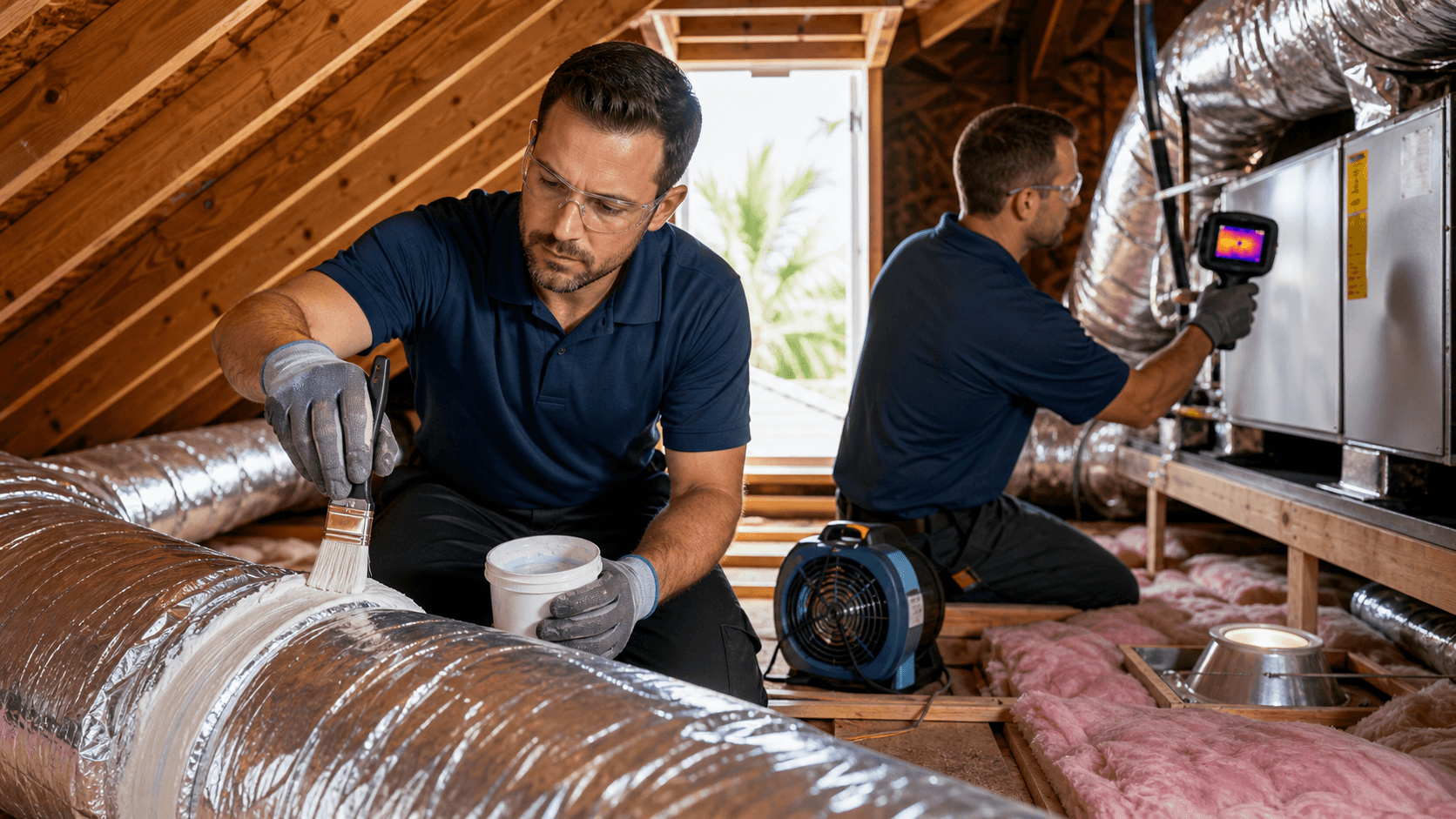
- Applying mastic to seal joints and seams
- Using the right type of duct tape to back up mastic
- Sealing gaps around vents and air handlers
- Repairing or replacing damaged duct runs
- Adjusting or redesigning ducts to balance airflow between rooms
After proper duct sealing, local homeowners often notice that rooms feel more even in temperature. The AC sounds calmer because it is not straining as hard. Dust levels can drop, since attic air is not getting pulled into the system as much. And over time, many people see that their cooling system does not have to run as long to do the same job.
Insulation That Shields Your Home From Cocoa Heat
Insulation is your shield between the hot roof and the cool air inside. In our area, the sun bakes down on roofs for long hours, and that heat can pour right into the home if insulation is missing or weak. When that happens, your AC has to fight a steady stream of heat all day.
The main insulation options we see include:
- Blown-in insulation that fills attic floors and hard-to-reach spots
- Batt insulation, which comes in pre-cut rolls
- Spray foam insulation, which can be applied to certain surfaces
Each type has its place, but the goal is the same: slow down heat flow so your conditioned air stays inside longer. When the attic is better insulated, the rooms below warm up more slowly. That means:
- Longer, steadier cooling cycles instead of rapid on-off bursts
- Less strain on compressors and fans
- Fewer times you hear the AC kicking on during the hottest parts of the day
With solid insulation, you are not cooling your attic or the outdoors. You are keeping the comfort where it belongs, inside your Cocoa home or business.
Ventilation Upgrades for Cooler, Drier Indoor Air
Ventilation is the part of the system that helps hot and humid air move out so cooler air can stay comfortable. Many people think only about the AC unit itself, but ventilation plays a big role in how hard that unit needs to work.
Key areas we look at include:
- Attic ventilation, like soffit vents and ridge vents
- Indoor air balance between supply and return ducts
- Areas where air might be trapped and not moving well
When attic ventilation is weak, hot air gets trapped under the roof. That heat then radiates down into your living spaces and raises the starting temperature for your AC. The system has to run longer and more often just to hold your usual thermostat setting.
Better ventilation can:
- Let hot attic air escape instead of building up
- Support more even temperatures throughout the home
- Help manage indoor humidity levels
- Reduce moisture problems that can affect building materials
When ventilation improvements are combined with duct sealing and better insulation, they work together like a team. The AC does not have to push against as much heat or humidity, so it can cool more effectively with less runtime.
Plan Your Mid-Summer Tune-up and Energy Makeover
Mid-summer is a smart time to give your cooling system some attention. The early heat has already shown where your weak spots might be. Maybe one bedroom never feels quite cool, or maybe your AC seems to run late into the night. This is often when an energy audit paired with air conditioning maintenance in Cocoa can make a big difference.
A simple step-by-step plan can look like this:
- Start with a full system inspection and energy audit
- Tackle any major duct leaks or airflow issues first
- Add duct sealing to stop cooled air from escaping
- Improve insulation in key areas like the attic
- Upgrade attic and indoor ventilation where needed
- Finish with a tune-up to confirm everything is working together
By treating your home or business as a whole system, you give your AC a chance to work smarter, not harder. At Ray Brown Air and Heat, we focus on finding practical upgrades that help cut AC runtime, protect your equipment, and keep you more comfortable through the long Cocoa summer and beyond.
Keep Your Cocoa Home Comfortable All Year Long
If you are ready to prevent surprise breakdowns and keep your system running efficiently, schedule your air conditioning maintenance in Cocoa with Ray Brown Air and Heat today. Our technicians will inspect, clean, and fine-tune your unit so it performs reliably when you need it most. To book your appointment or ask questions about your system, simply contact us and we will help you take the next step.