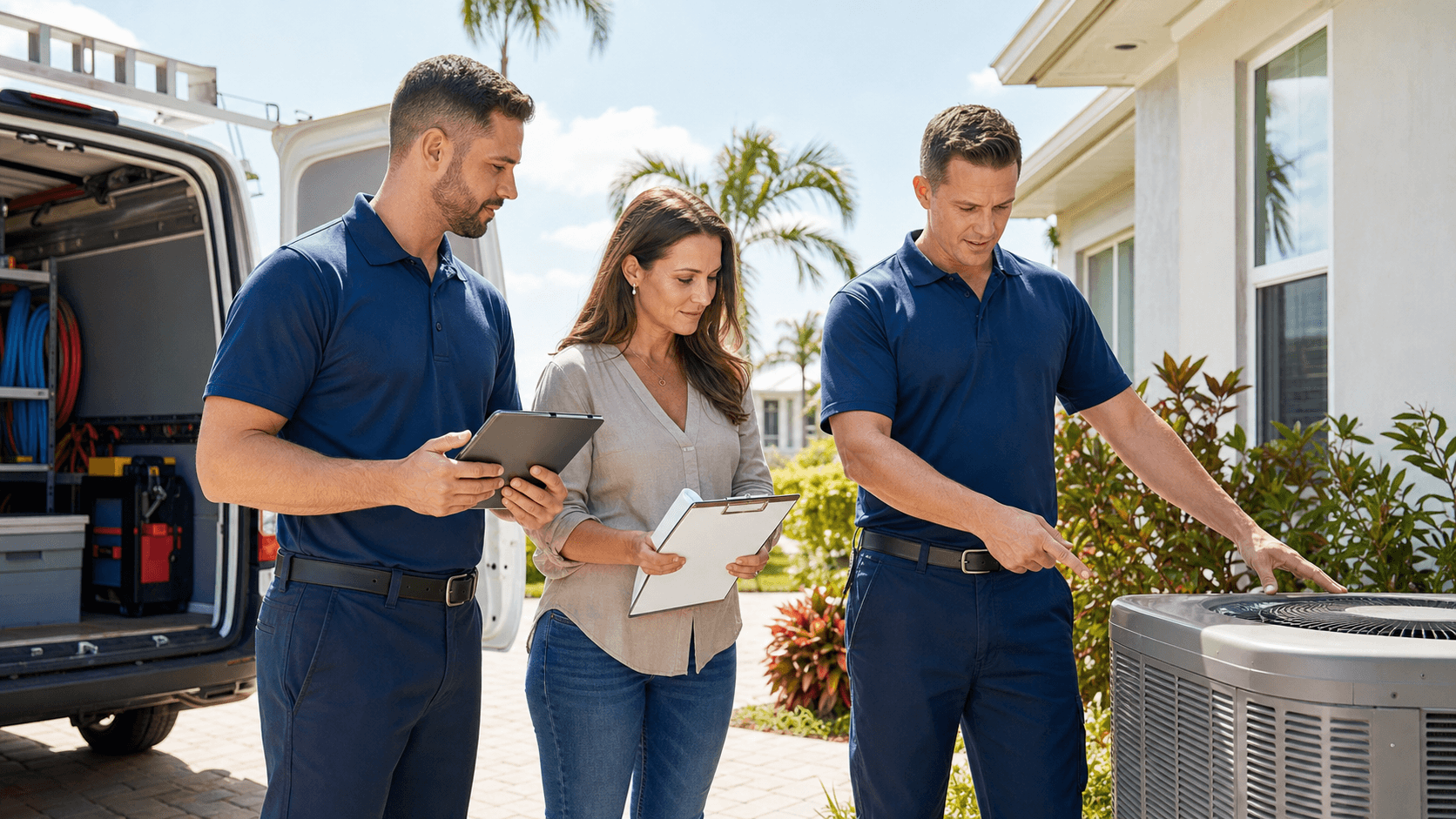
Avoid Costly Mistakes When Choosing an HVAC Pro
Choosing the right HVAC contractor in Cocoa or Rockledge is not just about comfort. In our hot, humid Florida climate, your AC affects your sleep, your health, and your energy bills every single day. When summer hits and systems work almost nonstop, any weak spot in your equipment or installation will show up fast.
By June, AC units are running hard and long. That is usually when older systems fail, small problems turn into big ones, and rushed decisions lead to poor installs. Picking the wrong HVAC contractor in Cocoa can mean repeat breakdowns, high power use, and frustration when you need cool air the most.
We are Ray Brown Air & Heat, a local family-owned HVAC company serving Brevard County. In this article, we want to act as a friendly guide so you can feel confident when you hire any contractor. You will learn how to check licenses, compare quotes, spot scams, and choose a long-term partner for your home or business comfort.
What Matters Most in an HVAC Contractor
Licensing and insurance come first. Any HVAC contractor who works on your home or business in Cocoa or Rockledge should be properly licensed in Florida and fully insured. That protects you if something goes wrong on the job.
Before you set an appointment, it is smart to:
- Ask for the Florida HVAC license number
- Confirm they carry liability insurance
- Confirm they carry workers' compensation insurance
- Verify the license with the state
Certifications can also be a good sign. Techs who keep up with training, including brand-specific and industry education, tend to stay current on newer systems and controls. This often leads to better troubleshooting and more reliable installs.
Local experience matters a lot in our part of Florida. We live with coastal humidity, salty air, and storm season, so your contractor should understand:
- How salt air can affect outdoor units and metal parts
- How high humidity impacts comfort, mold risk, and system sizing
- How to prepare systems for heavy use during long hot periods
A company with a long history in Brevard County has likely seen what works and what fails in Cocoa and Rockledge homes and businesses. That experience should shape their recommendations on equipment, ductwork, and maintenance timing.
Reputation is another big piece. Before you choose, take a few minutes to:
- Read Google reviews from Cocoa and Rockledge customers
- Look for patterns in feedback, not just the star rating
- See how the company responds to negative comments
- Ask neighbors, friends, or local businesses who they trust
Trustworthy, family-owned companies often show the same names and faces over time, support local events, and keep communication simple and honest. That steady presence usually tells you they plan to be around when you need them again.
Red Flags and Green Flags When Getting Quotes
A clear written estimate is a must. A good HVAC contractor in Cocoa should give you more than a quick number on a sticky note. A real proposal should list:
- Equipment brand and model numbers
- Scope of work and what is included
- Labor and any permit needs
- Warranty details
- Any extra items like new thermostats or indoor air quality products
They should also perform a load calculation instead of just swapping your system "like for like." This helps size the system based on your home's square footage, windows, insulation, and sun exposure, which matters a lot in our bright Florida sun. A careful contractor will also look at your ductwork, attic insulation, and electrical setup before quoting the job.
Watch out for pricing traps. Very low bids can be tempting when your AC just failed, but they sometimes come with hidden issues, like:
- No permits pulled
- Off-brand or mismatched equipment
- Shortcuts during installation
- Extra charges added later
It is smart to get at least two or three quotes and compare more than just the bottom line. Look at warranties, what is actually included, and how the company plans to support you after the install.
Pay attention to communication and professionalism during the quote visit. Green flags include:
- Showing up close to the scheduled time
- Wearing clear identification and acting respectfully
- Explaining options in plain language
- Giving you a written proposal, not just a verbal guess
- Taking time to answer questions without rushing
Red flags include high-pressure sales tactics, refusing to share references or license details, giving vague or confusing answers, or pushing you to sign on the spot. How they treat you now is usually how they will treat you later.
Comfort, Efficiency, and Indoor Air Quality
Comfort is not just about "cold air." A good contractor will ask about hot or cold spots, rooms that never feel right, noise levels, and allergy issues. They should also ask how you use your thermostat and which rooms you are in most.
Depending on your needs, they may suggest:
- Variable-speed systems for smoother, more even cooling
- Zoning to control different parts of the home or building separately
- Smart thermostats for better control and scheduling
For businesses in Cocoa and Rockledge, zoning and commercial controls are especially helpful, since you may have offices, kitchens, and customer areas that all need different settings.
Energy efficiency matters in our long cooling season. SEER2 ratings help show how efficient a system is, but the installation and ongoing maintenance also have a big impact. Poor airflow, bad duct design, or skipped tune-ups can waste a lot of power.
Ask potential contractors to:
- Explain the efficiency options they recommend
- Talk through expected operating costs
- Compare long-term savings for different system choices
Indoor air quality is another big concern in our humid coastal climate. High moisture and warm air can lead to mold, odors, and higher allergen levels, especially near the river and low-lying areas.
A full-service HVAC contractor should be able to discuss:
- Whole-home dehumidifiers to keep humidity in a healthy range
- UV lights for certain types of systems
- High-MERV filters that match your equipment
- Air purifiers for added filtration
The goal is balance. You want the right mix of dehumidification, ventilation, and filtration to keep both your family and your building materials protected.
Why 24/7 Service and Maintenance Plans Matter
By midyear, we hit peak AC use and the start of storm season. That is when breakdowns feel the worst, especially at night or over a weekend. Choosing a contractor that offers 24/7 emergency service can make a big difference for both homes and businesses.
Some companies, including ours at Ray Brown Air & Heat, also work with whole-home generators. Having a contractor who understands both your cooling system and your backup power can help keep you more comfortable when the power grid has issues.
Preventive maintenance is one of the best ways to stay ahead of problems. A quality maintenance visit usually includes:
- Cleaning indoor and outdoor coils
- Checking refrigerant levels
- Testing electrical parts and connections
- Verifying airflow and checking filters
- Looking for wear and small leaks
Regular tune-ups help reduce surprise breakdowns, extend equipment life, and keep energy use lower in our hot, salty air. Many contractors offer maintenance plans that include scheduled visits, priority service, and discounts on repairs.
For business owners, it can be very helpful to have one contractor for AC, heating, refrigeration, and indoor air quality. This means fewer vendors to manage and one team that understands your whole setup. For homeowners, it is convenient when the same trusted company can service your comfort systems and related equipment like generators. Over time, that single relationship can save stress and guesswork.
Take the Next Step to Protect Your Comfort
Before you decide on an HVAC contractor in Cocoa or Rockledge, a quick mental checklist can help:
- License and insurance verified
- Strong local reviews and referrals
- Clear, written estimate with details
- Equipment and options that match your real needs
- 24/7 support and maintenance plan options
- Indoor air quality and humidity control discussed
Try to balance short-term pressure with long-term comfort and reliability. The "fast fix" is not always the right fix when you live in a place that depends on AC so heavily.
When you speak with local contractors, including Ray Brown Air & Heat, ask specific questions about their experience in Brevard County, how they handle maintenance, and what their emergency response looks like. Choosing the right partner now helps your home or business stay cool, efficient, and comfortable through the heat, humidity, and storms that come our way.
Keep Your Home Comfortable With Trusted Local HVAC Experts
If your system is struggling or your energy bills are creeping up, our team at Ray Brown Air and Heat is ready to help. As a local HVAC contractor in Cocoa, we provide prompt, reliable service tailored to your home and budget. Reach out today through our contact page and let us get your heating and cooling back on track.